
In an era where hygiene and safety are paramount, the sodium hypochlorite generator has emerged as a game-changing technology for businesses across various sectors. This innovative device produces sodium hypochlorite (the active ingredient in bleach) on-site, transforming salt, water, and electricity into a powerful disinfectant solution. Whether you’re managing a municipal water treatment plant, operating a food processing facility, or maintaining a healthcare environment, a sodium hypochlorite generator offers a safer, more efficient alternative to traditional chemical procurement methods.
The Science Behind Sodium Hypochlorite Generation
At its core, a sodium hypochlorite generator uses electrolysis to convert saltwater into a usable disinfectant. Here’s a closer look at the process:
- Brine Solution Preparation: The system first creates a saltwater solution by dissolving sodium chloride (common table salt) in water.
- Electrolytic Cell Processing: This brine solution passes through an electrolytic cell where an electric current initiates a chemical reaction.
- Chemical Transformation: The electrolysis process splits the sodium chloride into its component parts, producing sodium hypochlorite (NaOCl), hydrogen gas, and sodium hydroxide.
- Solution Dilution: The resulting sodium hypochlorite solution (typically 0.8-1.2% concentration) is then diluted to the required strength for specific applications.
This closed-loop system ensures consistent production of high-quality sodium hypochlorite without the need for external chemical inputs beyond salt and water.
Why Businesses Are Switching to On-Site Sodium Hypochlorite Generation
The shift toward on-site sodium hypochlorite generation represents a significant advancement in chemical management. Here are the key reasons businesses are making the switch:
- Cost Efficiency: Producing sodium hypochlorite on-site can reduce chemical costs by 30-60% compared to purchasing pre-made solutions.
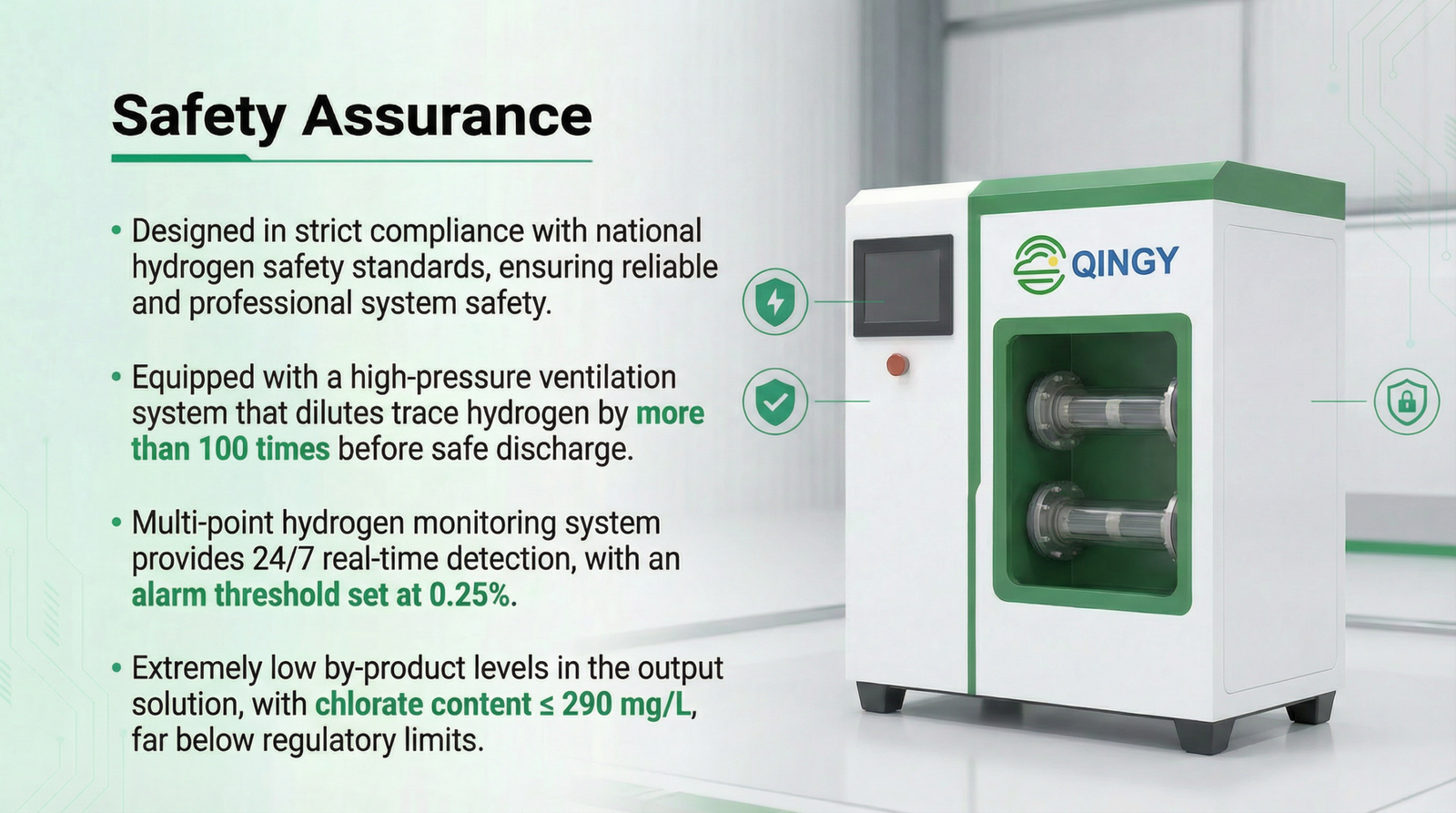
- Safety Improvements: Eliminate risks associated with transporting and storing large quantities of concentrated chemicals.
- Quality Control: Maintain precise concentration levels for different applications, ensuring optimal disinfection performance.
- Environmental Benefits: Reduce plastic waste from chemical containers and minimize carbon emissions from transportation.
- Regulatory Compliance: Simplify compliance with increasingly stringent chemical handling and storage regulations.
- Operational Flexibility: Adjust production levels based on demand, ensuring you always have the right amount of disinfectant when needed.
Industries Benefiting from Sodium Hypochlorite Generators
The versatility of sodium hypochlorite generators makes them valuable across numerous sectors:
- Water Treatment: Municipal and industrial water treatment facilities use sodium hypochlorite for primary disinfection and biofilm control.
- Food Processing: Ensuring food safety by sanitizing equipment, surfaces, and process water.
- Healthcare: Disinfecting medical equipment, surfaces, and water systems in hospitals and clinics.
- Aquatics: Maintaining water quality in swimming pools, spas, and water parks.
- Agriculture: Sanitizing irrigation water and equipment in farming operations.
- Hospitality: Ensuring clean water and surfaces in hotels, resorts, and cruise ships.
Selecting the Right Sodium Hypochlorite Generator for Your Business
When choosing a sodium hypochlorite generator, consider these critical factors:
- Production Capacity: Determine your daily sodium hypochlorite requirements to select a system that matches your operational needs.
- Quality Components: Look for systems with durable, corrosion-resistant materials like titanium electrodes and high-quality membranes.
- Automation Features: Advanced systems offer automated monitoring and adjustment capabilities for optimal performance.
- Energy Efficiency: Select models with high energy efficiency ratings to minimize operational costs.
- Scalability: Consider whether the system can expand with your business as needs grow.
- Technical Support: Ensure the manufacturer provides comprehensive installation, training, and maintenance support.
Maintenance and Long-Term Performance
Proper maintenance is essential for maximizing the lifespan and efficiency of your sodium hypochlorite generator:
- Regular Inspections: Schedule routine system checks to identify potential issues before they impact performance.
- Electrode Cleaning: Follow manufacturer recommendations for cleaning electrodes to maintain optimal electrolysis efficiency.
- Water Quality Management: Monitor incoming water quality to prevent scaling and mineral buildup in the system.
- Component Replacement: Replace consumable parts according to the manufacturer’s schedule to maintain performance.
- Operator Training: Ensure staff members receive proper training on system operation and safety protocols.
Conclusion: The Future of Disinfection is On-Site
A sodium hypochlorite generator represents a strategic investment in operational efficiency, safety, and sustainability. By producing your own disinfectant on-site, you gain control over your chemical supply chain while reducing costs and improving safety.
The technology continues to evolve, with newer models offering enhanced automation, energy efficiency, and remote monitoring capabilities. As businesses increasingly prioritize sustainability and cost control, sodium hypochlorite generators will become even more integral to modern disinfection strategies.
Whether you’re looking to upgrade your current chemical management system or implement a new disinfection solution, a sodium hypochlorite generator offers a proven, cost-effective approach. With proper selection and maintenance, these systems can provide reliable service for 10-15 years, delivering a substantial return on investment.
Take the first step toward transforming your disinfection processes. Contact a sodium hypochlorite generator specialist today to evaluate your specific needs and discover how on-site generation can benefit your operations.