
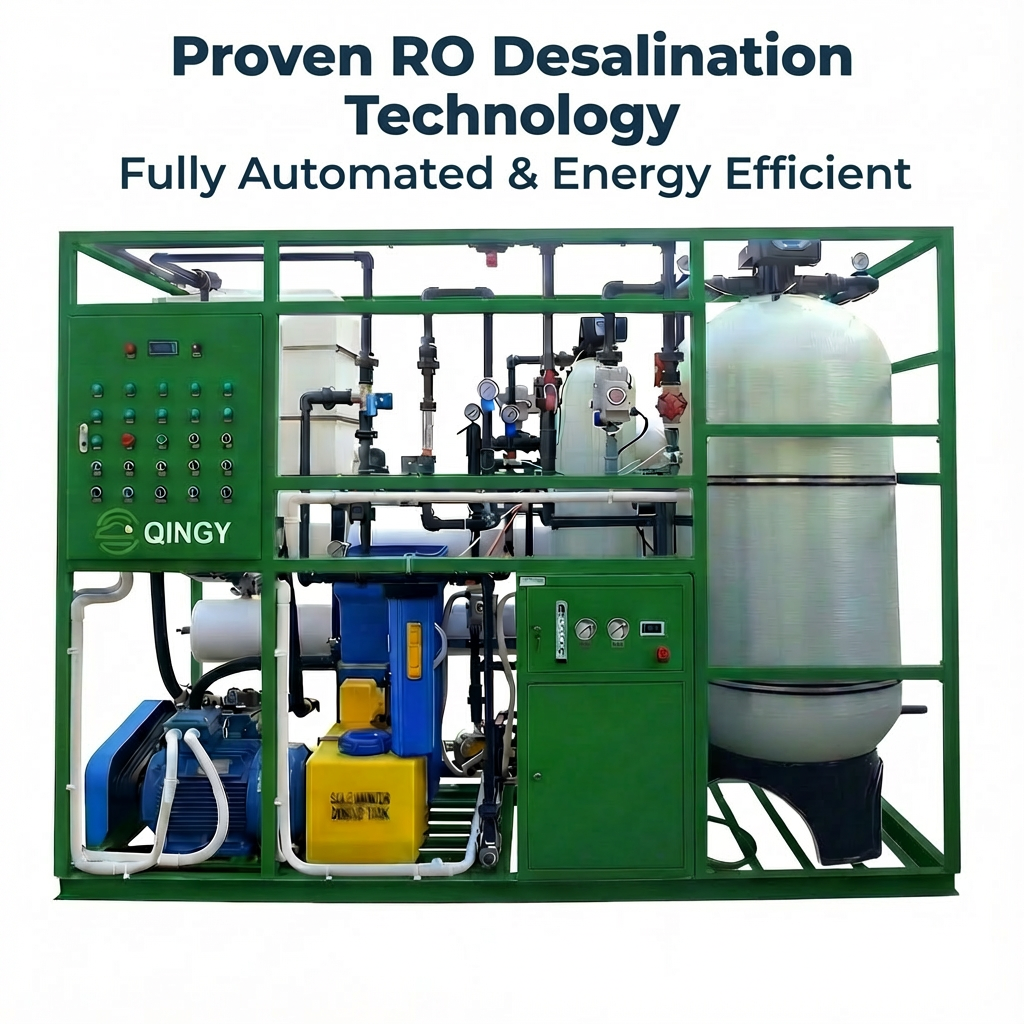
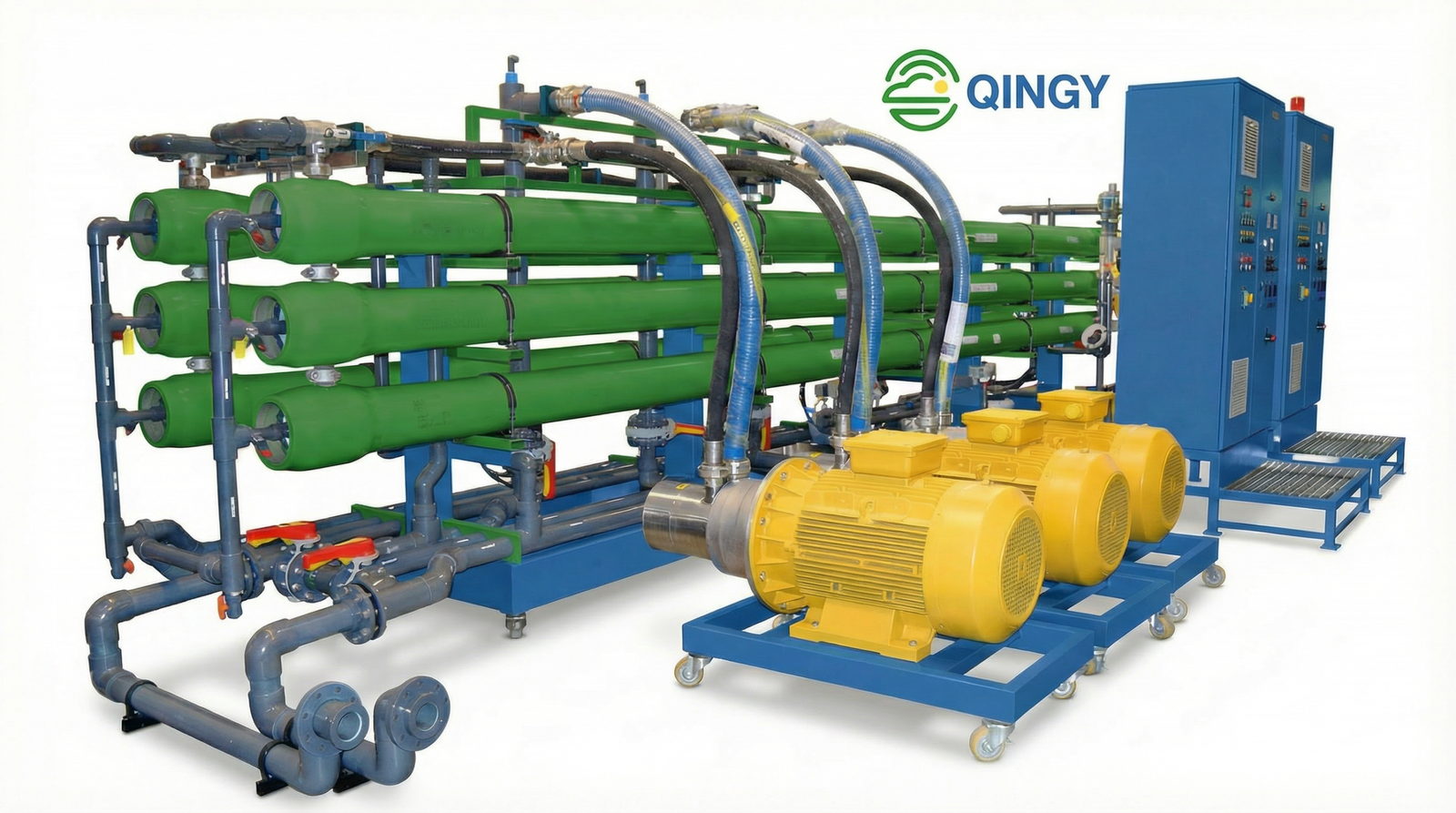
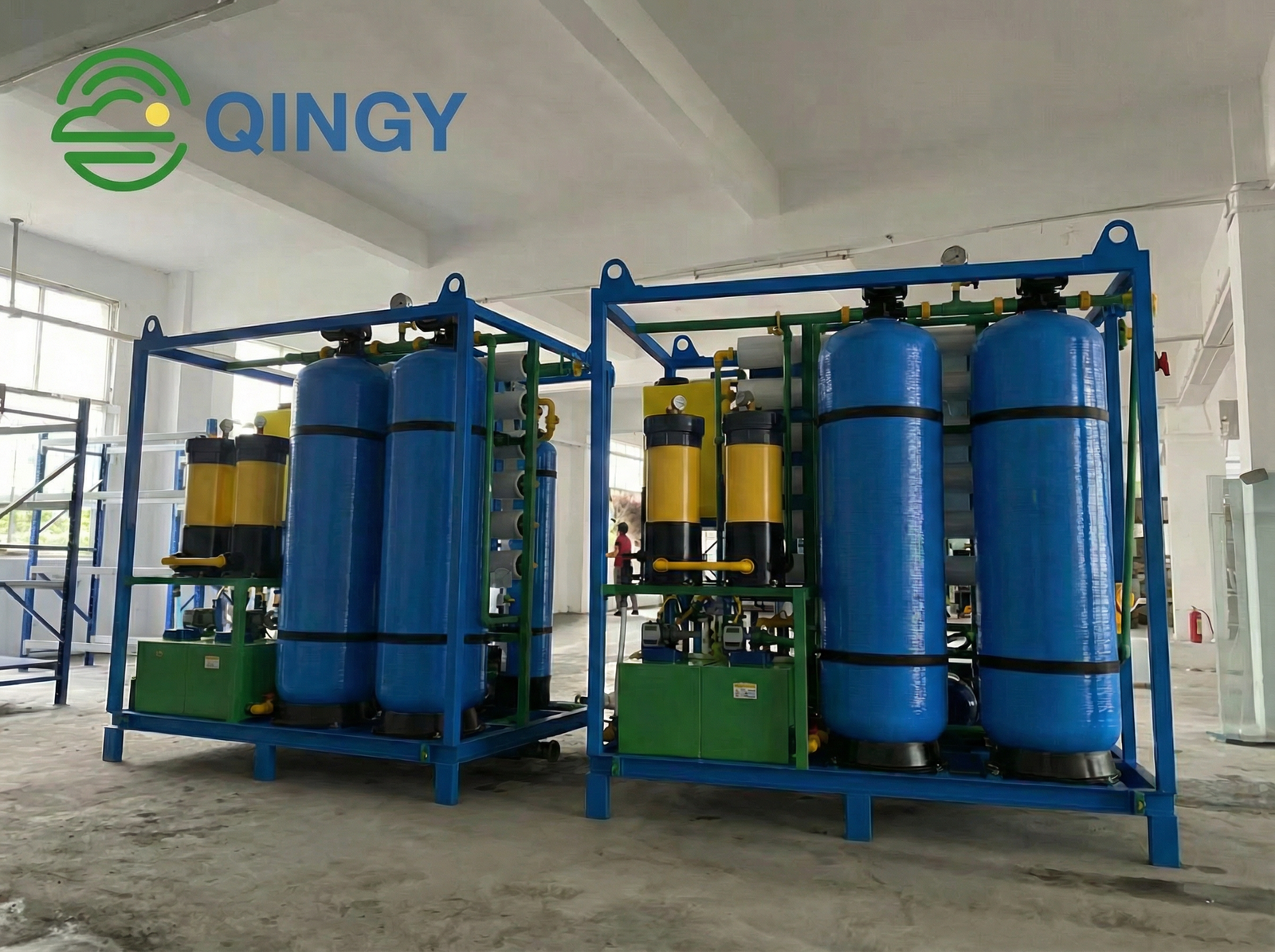
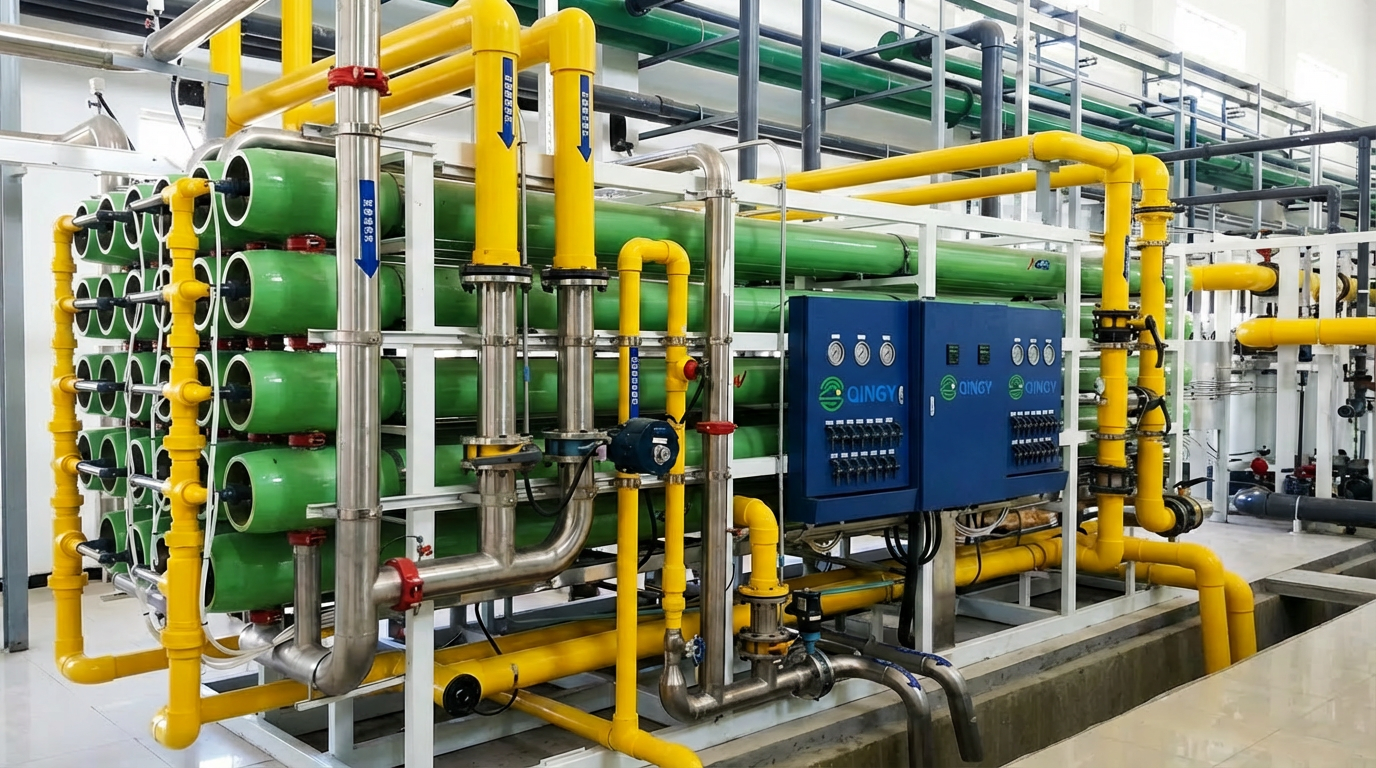
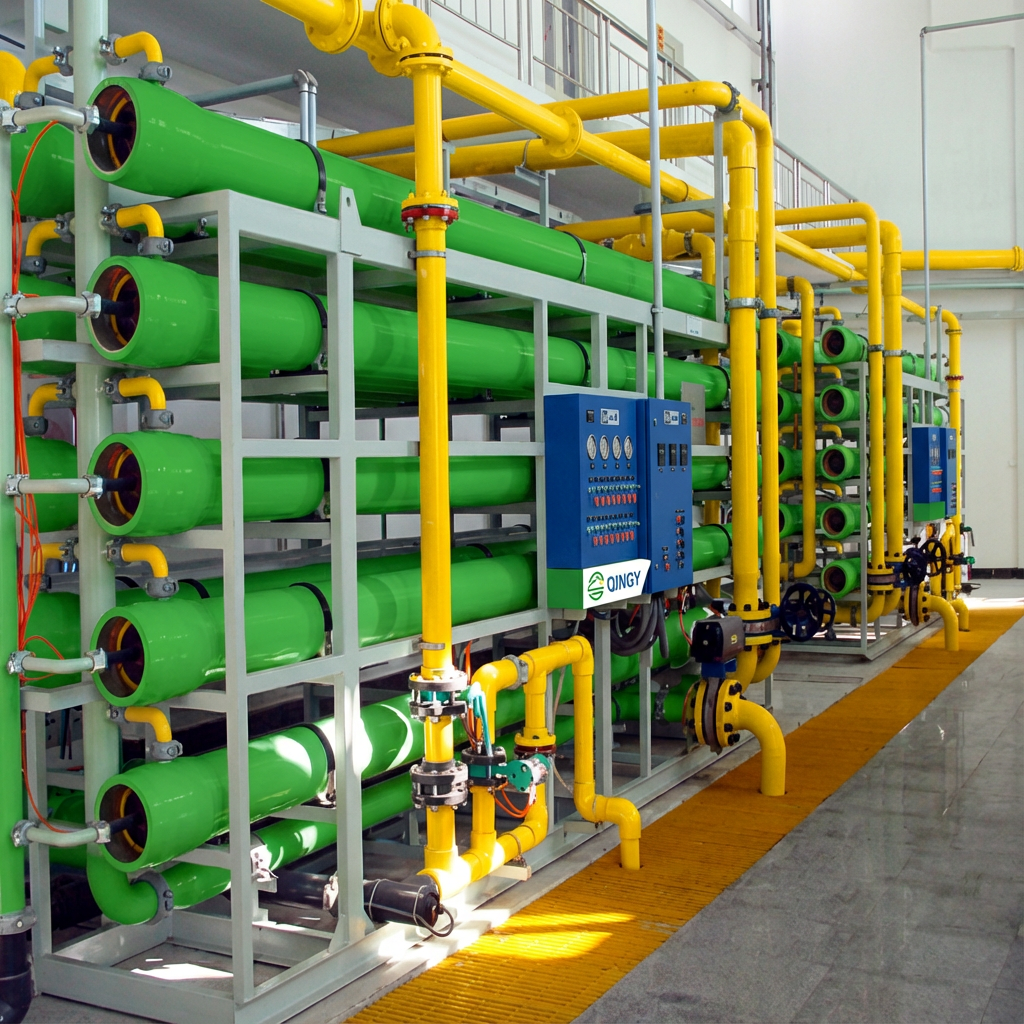
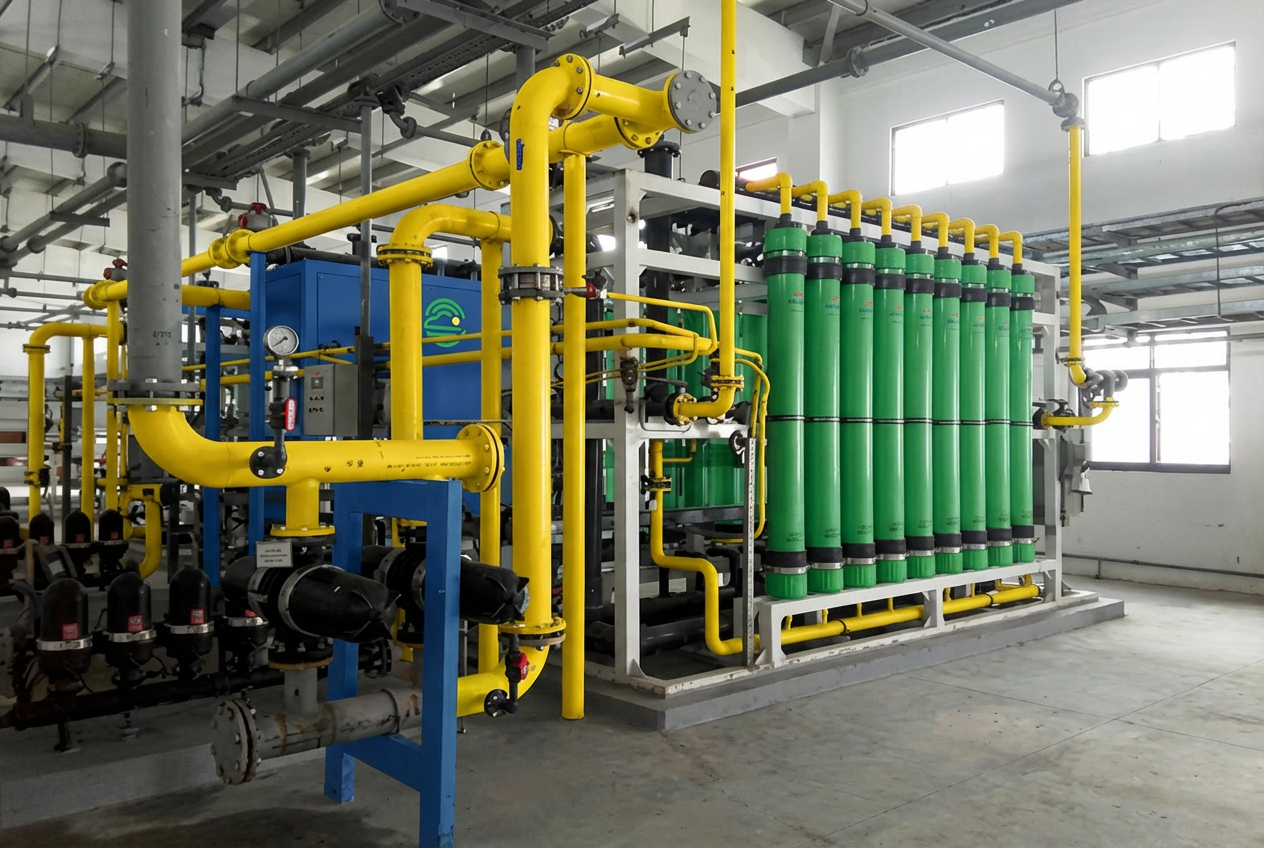
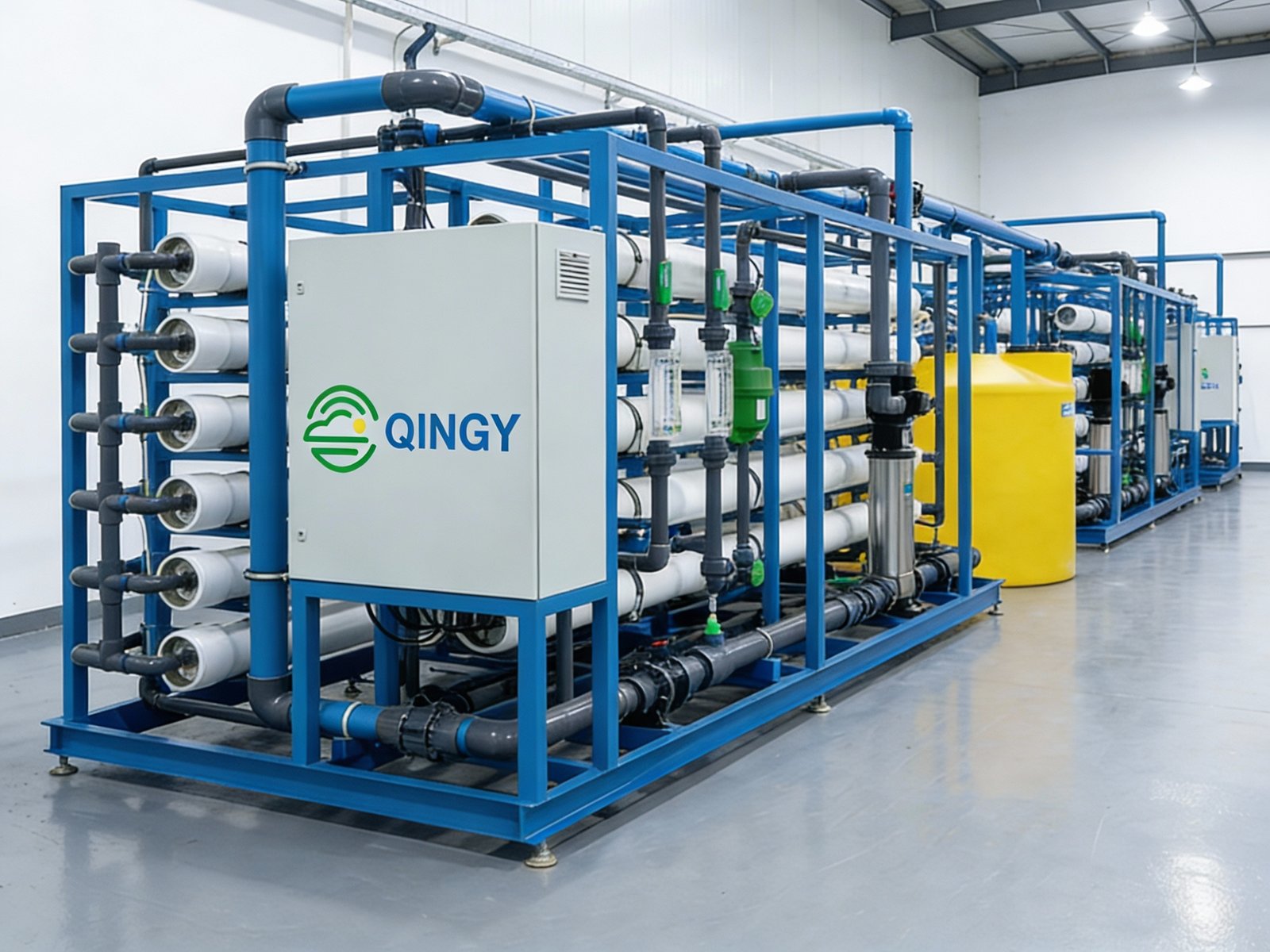
Complete Seawater Desalination System
Complete turnkey seawater desalination system. RO technology for 1,000-50,000 m³/day fresh water production. Energy recovery, UF pre-treatment, and post-treatment included.
Product Details
Complete Seawater Desalination System – Overview
QINGY provides complete turnkey seawater desalination systems based on reverse osmosis (RO) technology, delivering reliable fresh water production from 1,000 to 50,000 m³/day. Our systems are deployed in arid coastal regions, island communities, industrial facilities, and emergency water supply scenarios worldwide. Each system is custom-engineered to match your specific feed water quality, production capacity, and product water requirements.
System Configuration
A complete desalination system consists of multiple integrated treatment stages:
- Intake & Pre-treatment: Seawater intake (open sea or beach well), screening, and coarse filtration
- Coagulation & Flocculation: Chemical dosing to remove suspended solids and turbidity
- Media Filtration: Multi-layer sand/anthracite filters for turbidity reduction to <1 NTU
- Ultrafiltration (UF): Hollow-fiber UF membranes for further protection of RO membranes (SDI <3)
- Cartridge Filtration: 5 μm security filter as final RO membrane protection
- Reverse Osmosis: High-pressure RO membrane array (typically 2-stage for seawater)
- Post-treatment: pH adjustment, remineralization, and disinfection
- Cleaning & CIP: Chemical cleaning system for membrane maintenance
Technical Specifications
| Parameter | Range |
|---|---|
| Production Capacity | 1,000 – 50,000 m³/day |
| Feed Water TDS | 30,000 – 45,000 mg/L (seawater) |
| Product Water TDS | <500 mg/L (drinking water standard) |
| Recovery Rate | 35%–50% (seawater RO) |
| Operating Pressure | 55–70 bar (seawater); 15–25 bar (brackish) |
| Energy Recovery | Isobaric pressure exchanger (PX) for 40–50% energy savings |
| Specific Energy | 2.5–4.0 kWh/m³ (depending on capacity and TDS) |
| RO Membrane | 8″ seawater RO elements (DOW/SWKC/Hydranautics) |
| System Control | PLC + SCADA with remote monitoring |
| Design Life | 20–25 years |
Energy Recovery Technology
Our systems incorporate state-of-the-art isobaric pressure exchangers (e.g., ERI Px series) that recover 94–97% of the brine stream pressure and transfer it to the feed stream. This reduces specific energy consumption by 40–50% compared to systems without energy recovery, making large-scale desalination economically viable.
Why Choose QINGY Desalination Systems?
- Custom engineering: Every system is designed around your specific feed water analysis, capacity requirement, and product water standard
- Proven technology: We use only industry-leading membrane elements and high-pressure pumps from established manufacturers
- Complete solution: From intake to product water tank — we deliver the entire system, not just the RO skid
- Pre-treatment expertise: Proper pre-treatment is the key to long RO membrane life. We engineer UF + media filtration systems that maintain SDI <3 consistently.
- Post-treatment included: Product water is pH-adjusted and remineralized to meet WHO drinking water standards
- Integrated disinfection: Our own NaClO generators can be bundled for cost-effective on-site disinfection
- Global support: Installation, commissioning, training, and remote monitoring worldwide
Applications
- Municipal drinking water supply for coastal cities and island communities
- Industrial process water for refineries, power plants, and manufacturing
- Resort and hotel water supply on islands
- Military and emergency mobile water supply
- Mining operations in arid coastal regions
- Agricultural irrigation in water-scarce coastal areas
FAQ
What is the typical cost per cubic meter of product water?
For seawater RO with energy recovery, the operating cost is typically $0.50–1.50/m³ (including electricity, chemicals, membrane replacement, and maintenance). Capital cost amortized over 20 years adds $0.20–0.60/m³, giving a total water cost of $0.70–2.10/m³.
How long do RO membranes last?
With proper pre-treatment (SDI <3, no chlorine exposure), seawater RO membranes typically last 5–7 years. Brackish water membranes last 7–10 years. Our pre-treatment systems are designed to maximize membrane life.
Can the system handle varying feed water quality?
Yes. Seawater TDS varies seasonally (temperature affects salinity). Our PLC control system automatically adjusts operating pressure and recovery rate to maintain consistent product water quality under varying conditions.