
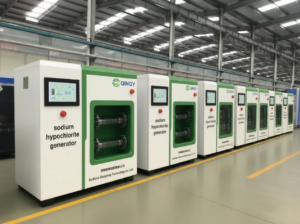
In an era where clean water and effective sanitation are more critical than ever, businesses and municipalities are searching for sustainable, cost-effective disinfection solutions. Enter the sodium hypochlorite generator – an innovative technology that produces sodium hypochlorite (the active ingredient in bleach) on-site, eliminating the need for hazardous chemical transportation and storage.
Unlike traditional methods that rely on purchasing and storing large quantities of chlorine products, these generators create sodium hypochlorite from just three basic ingredients: salt, water, and electricity. This revolutionary approach is transforming water treatment across various industries, from municipal water systems to food processing facilities and healthcare institutions.
1、How Sodium Hypochlorite Generators Work
The core technology behind these systems is electrolysis – a process that transforms ordinary saltwater into a powerful disinfectant. When an electrical current passes through a brine solution (salt dissolved in water), the system separates the sodium and chloride ions. The chloride ions combine with water molecules to form hypochlorous acid, which then dissociates into hypochlorite ions – the active sanitizing component.
The process typically involves several key components:
- A brine tank where salt and water mix to create the starting solution
- An electrolytic cell where the chemical transformation occurs
- A power supply unit that provides the necessary electrical current
- Control systems to monitor and adjust the production process
- Storage tanks for the generated sodium hypochlorite solution
The concentration of the final product can be adjusted based on specific application requirements, usually ranging from 0.8% to 1.2% sodium hypochlorite solution.
2、Key Benefits of On-Site Sodium Hypochlorite Generation
Investing in a sodium hypochlorite generator offers numerous advantages over traditional disinfection methods:
-
Enhanced Safety – By producing sodium hypochlorite on-site, organizations eliminate the risks associated with transporting and storing hazardous chemicals. This reduces workplace accidents and compliance issues related to chemical handling regulations.
-
Cost Savings – While the initial investment may be higher than purchasing pre-made chlorine products, the long-term savings are substantial. The cost of salt, water, and electricity is significantly lower than buying, transporting, and storing commercial bleach solutions.
-
Improved Water Quality – Freshly generated sodium hypochlorite is more effective than stored solutions, which can degrade over time. This ensures consistent disinfection performance and better water quality results.
-
Environmental Benefits – On-site generation reduces carbon emissions associated with chemical transportation. The process also produces fewer byproducts compared to other disinfection methods, making it a more eco-friendly solution.
-
Operational Flexibility – These systems can be scaled to meet varying demand, from small batch production to continuous operation. This adaptability is particularly valuable for facilities with fluctuating disinfection needs.
-
Consistent Quality – The automated nature of these systems ensures uniform concentration and quality of the generated sodium hypochlorite, eliminating the inconsistencies sometimes found in commercial products.
3、Applications of Sodium Hypochlorite Generators
The versatility of these systems makes them suitable for a wide range of applications:
- Municipal Water Treatment – Many cities and towns use these generators for drinking water disinfection and wastewater treatment processes.
- Food and Beverage Industry – Processing plants utilize sodium hypochlorite for equipment sanitization, surface disinfection, and water treatment in production lines.
- Healthcare Facilities – Hospitals and clinics rely on these systems for instrument sterilization and surface disinfection protocols.
- Agricultural Applications – Livestock operations use sodium hypochlorite for barn disinfection and water treatment for animal consumption.
- Swimming Pool Maintenance – Some larger aquatic facilities use these generators for consistent water sanitization.
- Industrial Processes – Various manufacturing operations implement these systems for process water treatment and equipment cleaning.
4、Choosing the Right Sodium Hypochlorite Generator for Your Needs
Selecting the appropriate system requires careful consideration of several factors:
- Capacity Requirements – Determine your daily sodium hypochlorite needs based on current and projected future operations.
- Space Considerations – Evaluate the available space for installation, including both the generator unit and associated components.
- Power Supply – Ensure your facility has the necessary electrical infrastructure to support the system’s power requirements.
- Water Quality – The quality of the water used in the process can affect performance, so consider any necessary pre-treatment systems.
- Maintenance Requirements – Assess the level of technical expertise available for system operation and maintenance.
- Budget Considerations – Compare the total cost of ownership, including initial investment, operational expenses, and maintenance costs.
5、Maintenance and Safety Considerations
Proper maintenance is essential for optimal performance and longevity of your sodium hypochlorite generator:
- Regular cleaning of electrolytic cells to prevent mineral buildup
- Periodic inspection of electrical components and connections
- Calibration of control systems to maintain consistent production
- Replacement of worn parts according to manufacturer guidelines
- Routine testing of the generated solution concentration
Safety protocols should include proper training for operators, appropriate personal protective equipment, and emergency response procedures for potential leaks or system malfunctions.
6、The Future of Disinfection Technology
As industries continue to prioritize safety, sustainability, and cost efficiency, sodium hypochlorite generators are becoming the preferred disinfection solution for forward-thinking organizations. The technology continues to evolve, with newer models offering improved energy efficiency, smarter controls, and integration with digital monitoring systems.
Whether you’re responsible for a municipal water treatment plant, a food processing facility, or a healthcare institution, investing in a sodium hypochlorite generator represents a strategic decision that delivers long-term benefits. By producing your own disinfectant on-site, you gain greater control over your sanitation processes while contributing to a safer, more sustainable operation.
If you’re considering implementing this technology, consult with industry experts to determine the optimal system configuration for your specific needs. With the right sodium hypochlorite generator, you can ensure reliable, cost-effective disinfection for years to come.
7、Advantages of Using an On-Site Sodium Hypochlorite Generator for Disinfection
– Reduced chemical transportation and storage risks
– Improved operational safety compared with chlorine gas
– More stable disinfectant concentration for consistent disinfection performance
– Lower long-term operating cost for industrial and municipal facilities
Call to Action
Contact Qingyau to discuss your water flow, chlorine dosage targets, and site conditions. Our engineers can recommend the right sodium hypochlorite generator configuration and capacity for your project.
Learn more about our sodium hypochlorite generator and high concentration sodium hypochlorite generator for industrial disinfection applications.