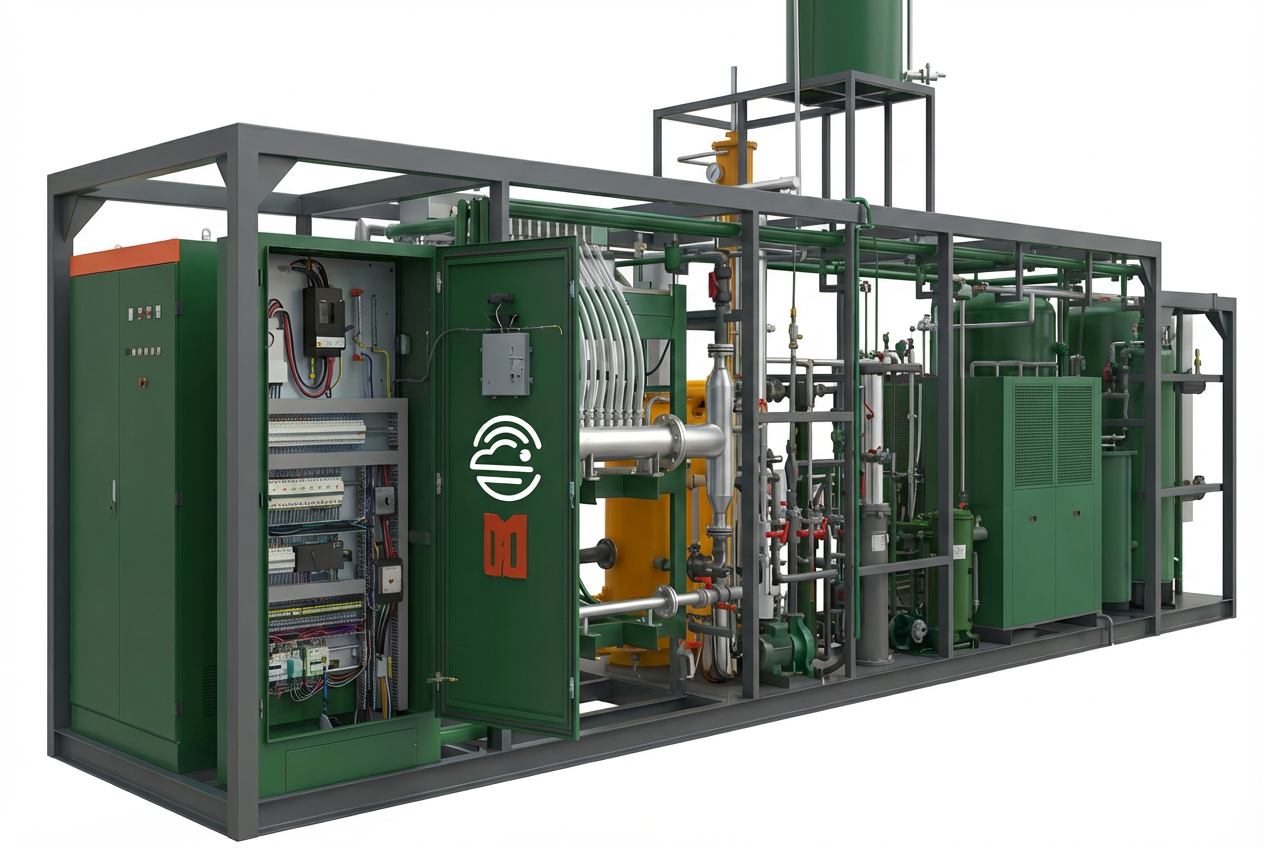
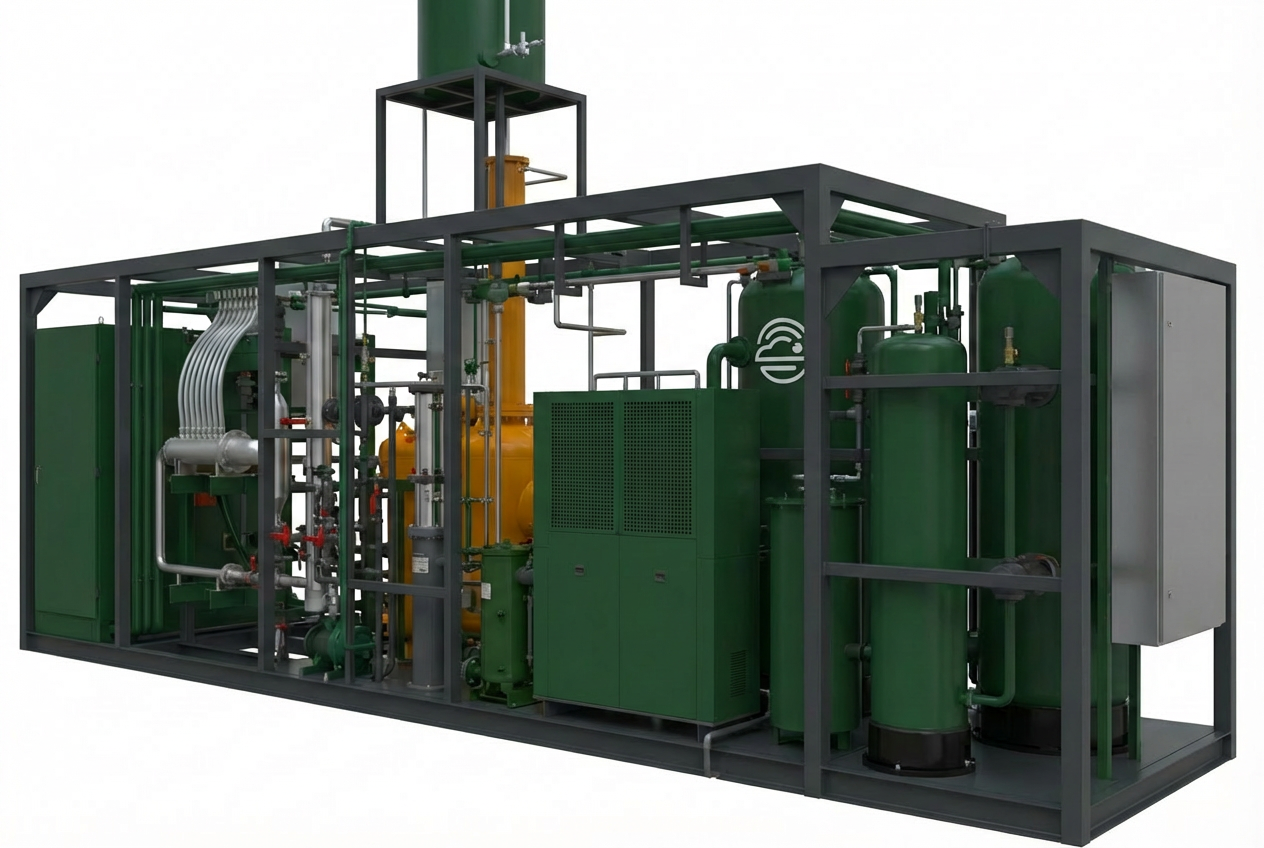
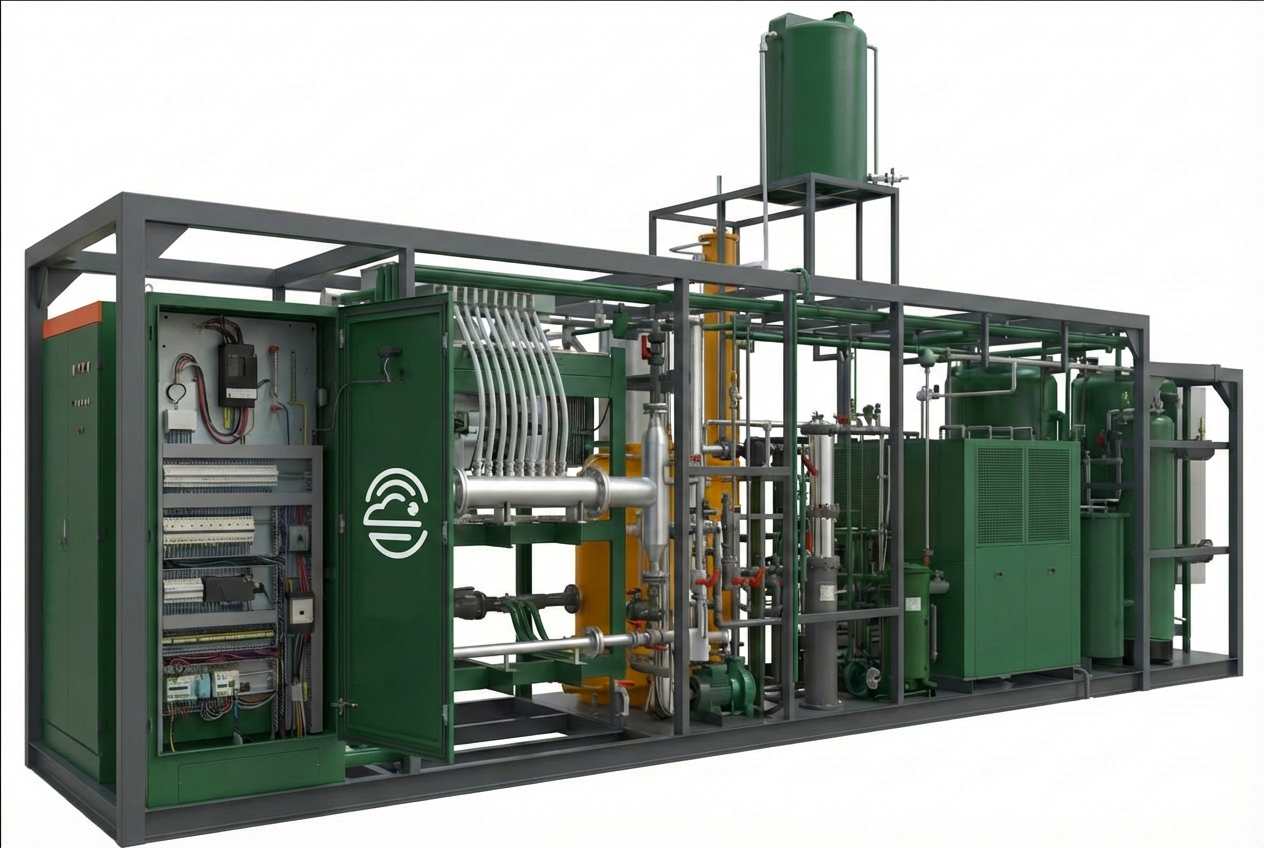
3 td High-Strength Sodium Hypochlorite (10%-15%)

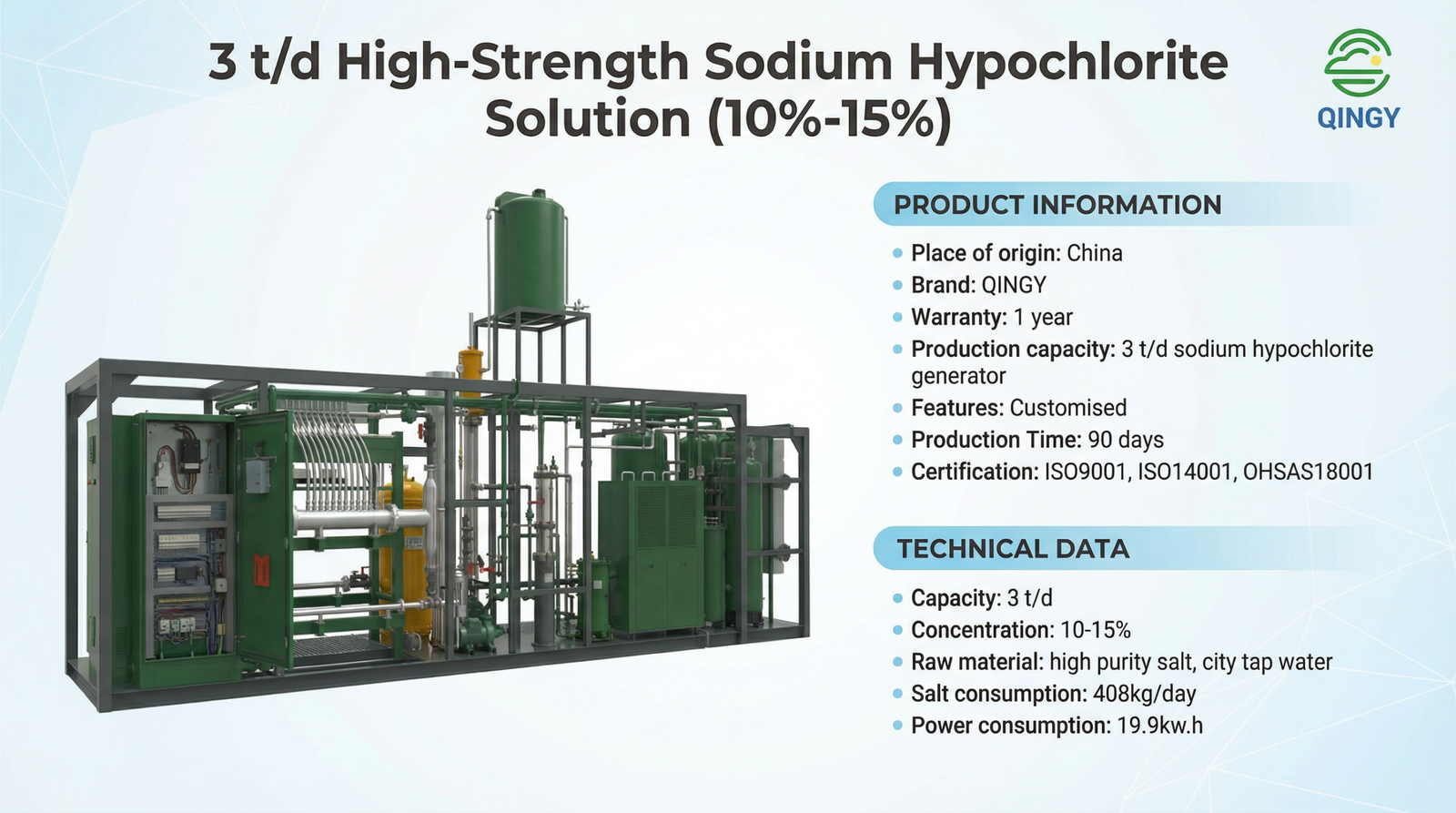
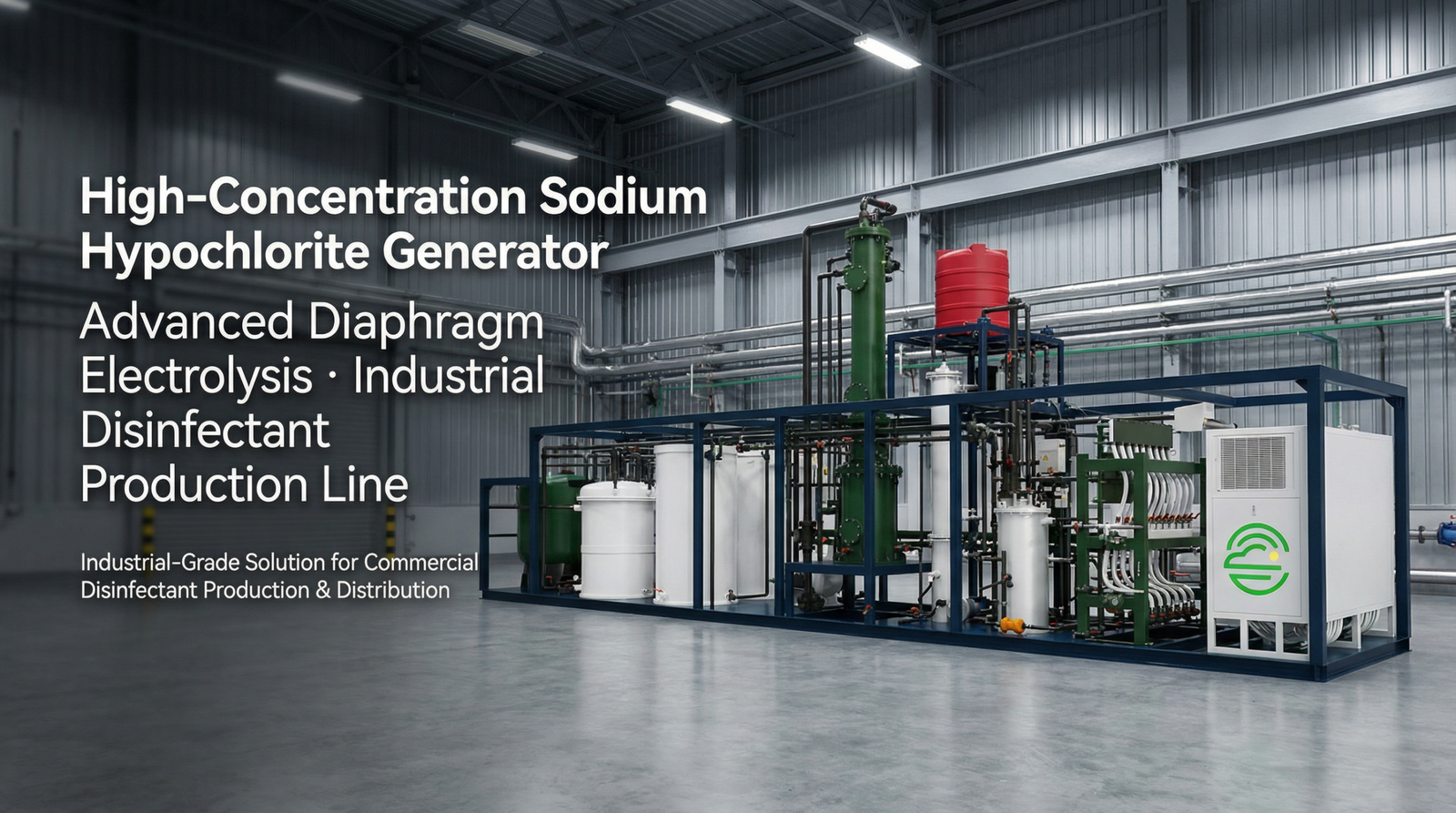
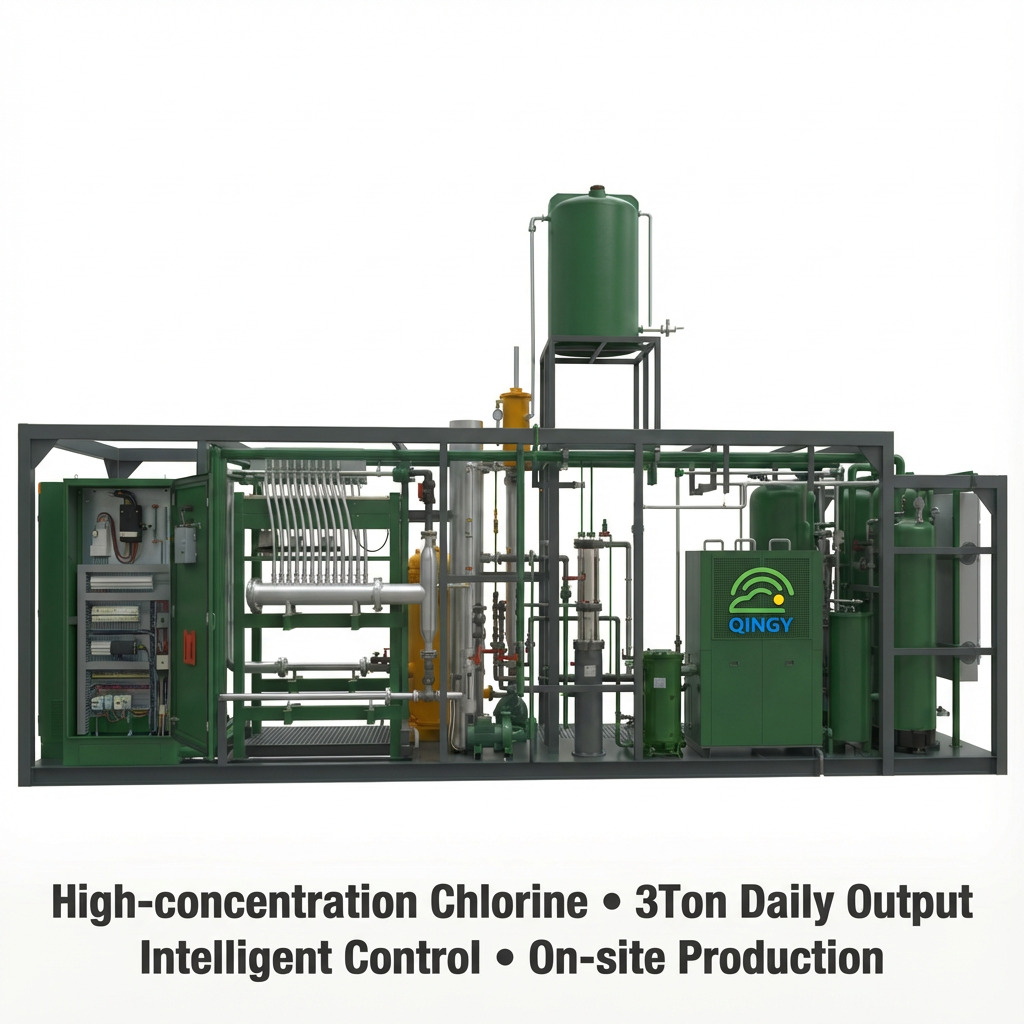
3 t/d membrane electrolysis NaClO generator producing 10-15% high-concentration sodium hypochlorite. Most popular model for medium municipal water plants and industrial facilities. 30-40% energy savings. CE, NSF, ATEX certified.

Product Details

3 t/d High-Strength Sodium Hypochlorite Generator – Overview

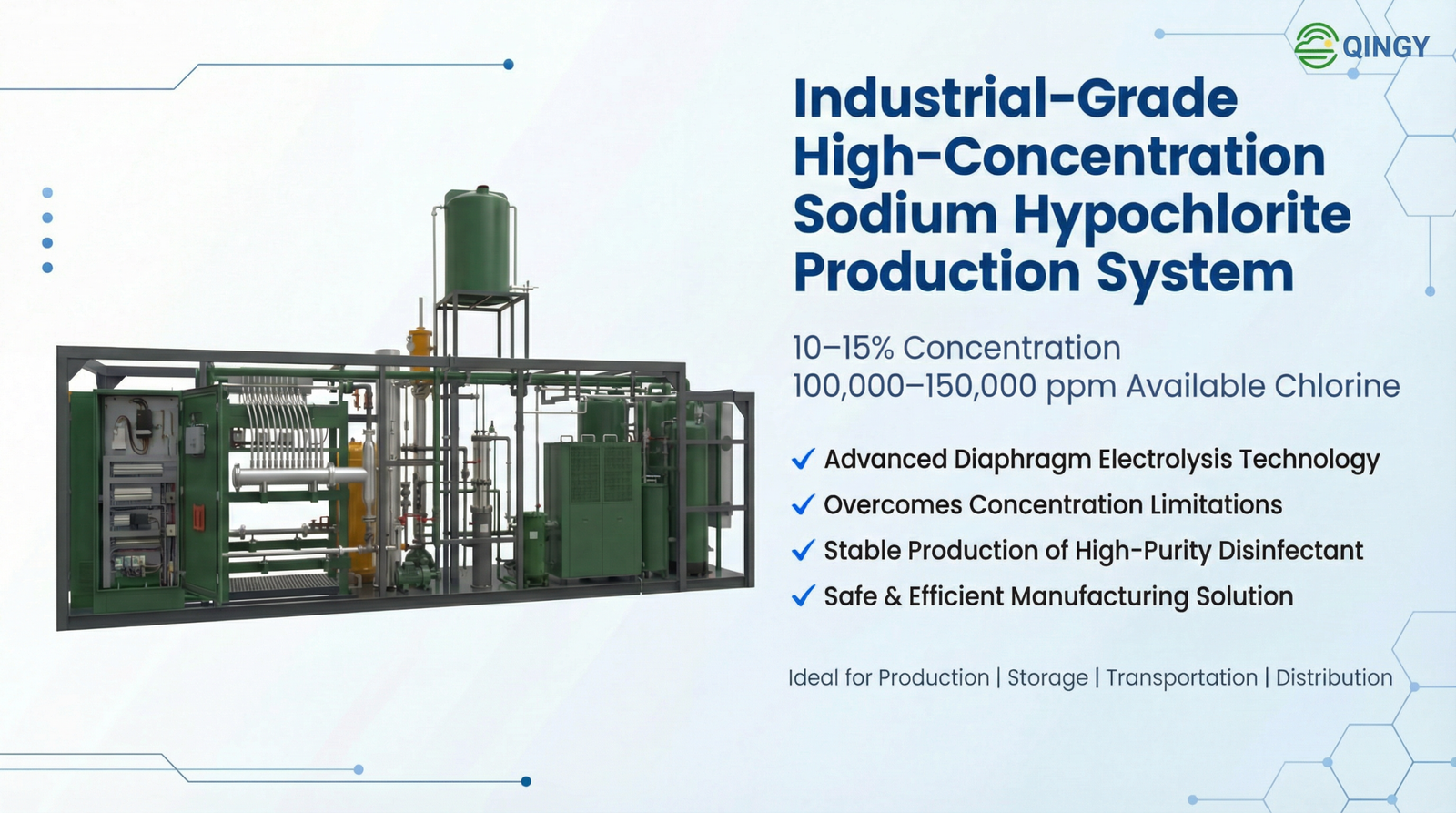
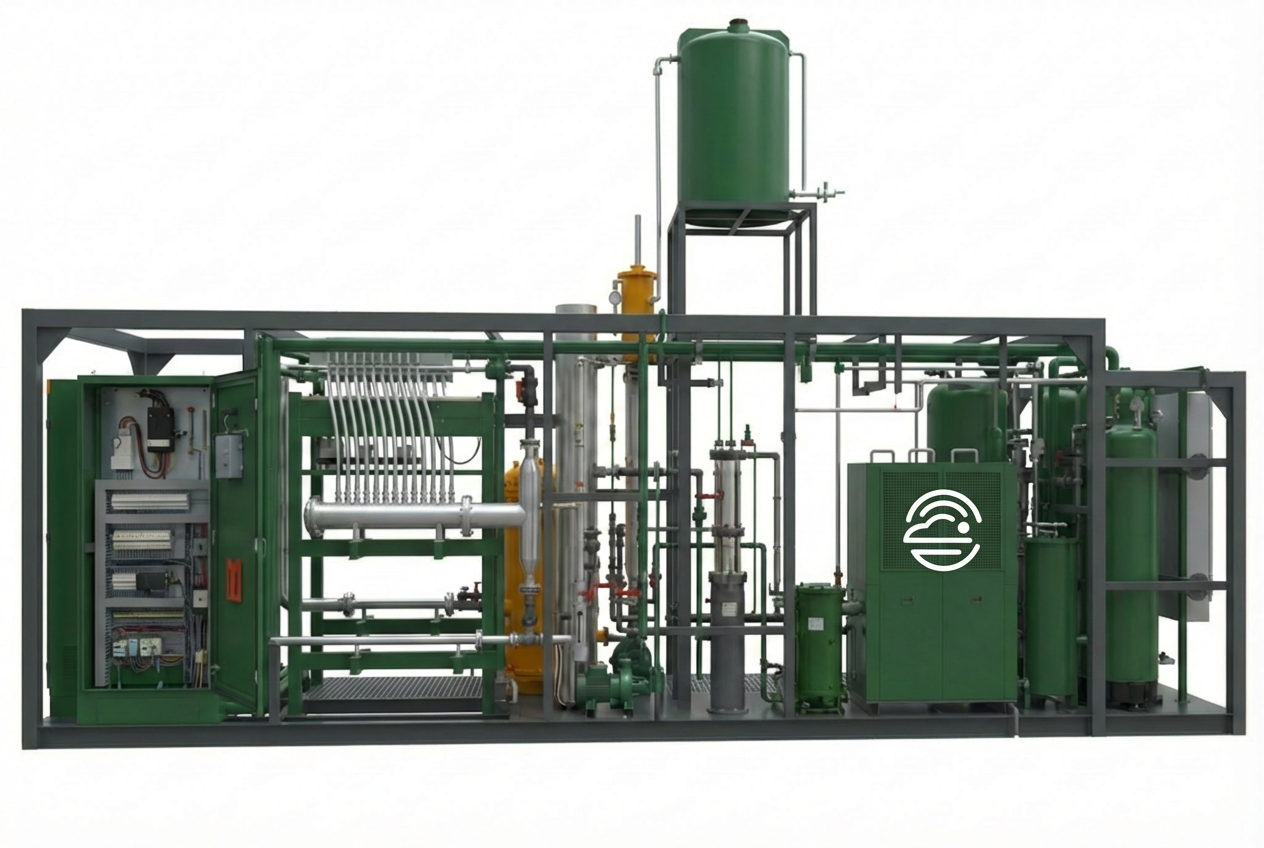
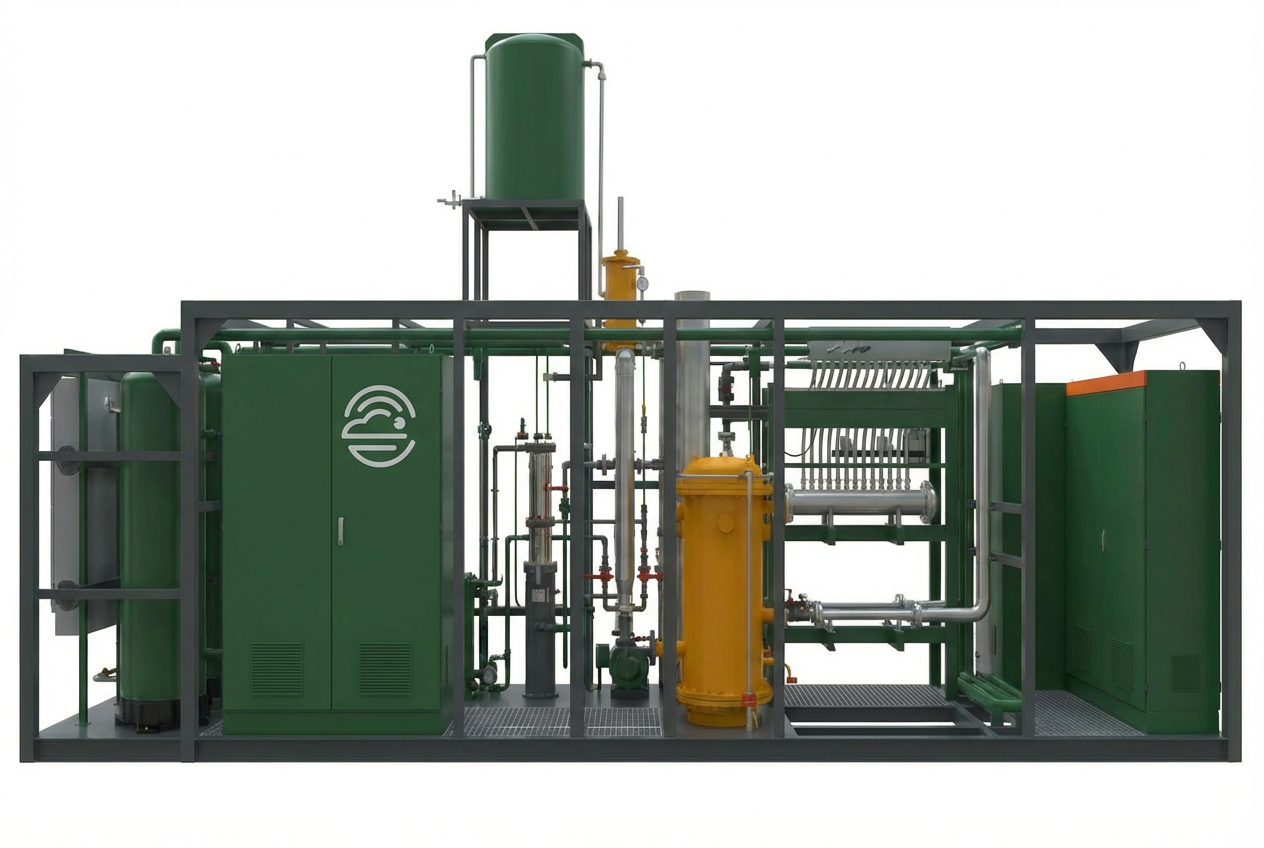
The QINGY 3 t/d high-strength sodium hypochlorite generator is our most popular model for medium-sized municipal water treatment plants and industrial facilities. Using advanced membrane electrolysis technology, it produces 10%–15% NaClO solution at a rate of approximately 3 kg/h (125 kg/h active chlorine equivalent), delivering reliable on-site disinfection with 30–40% lower energy consumption than conventional systems.

Technical Specifications

Parameter Value
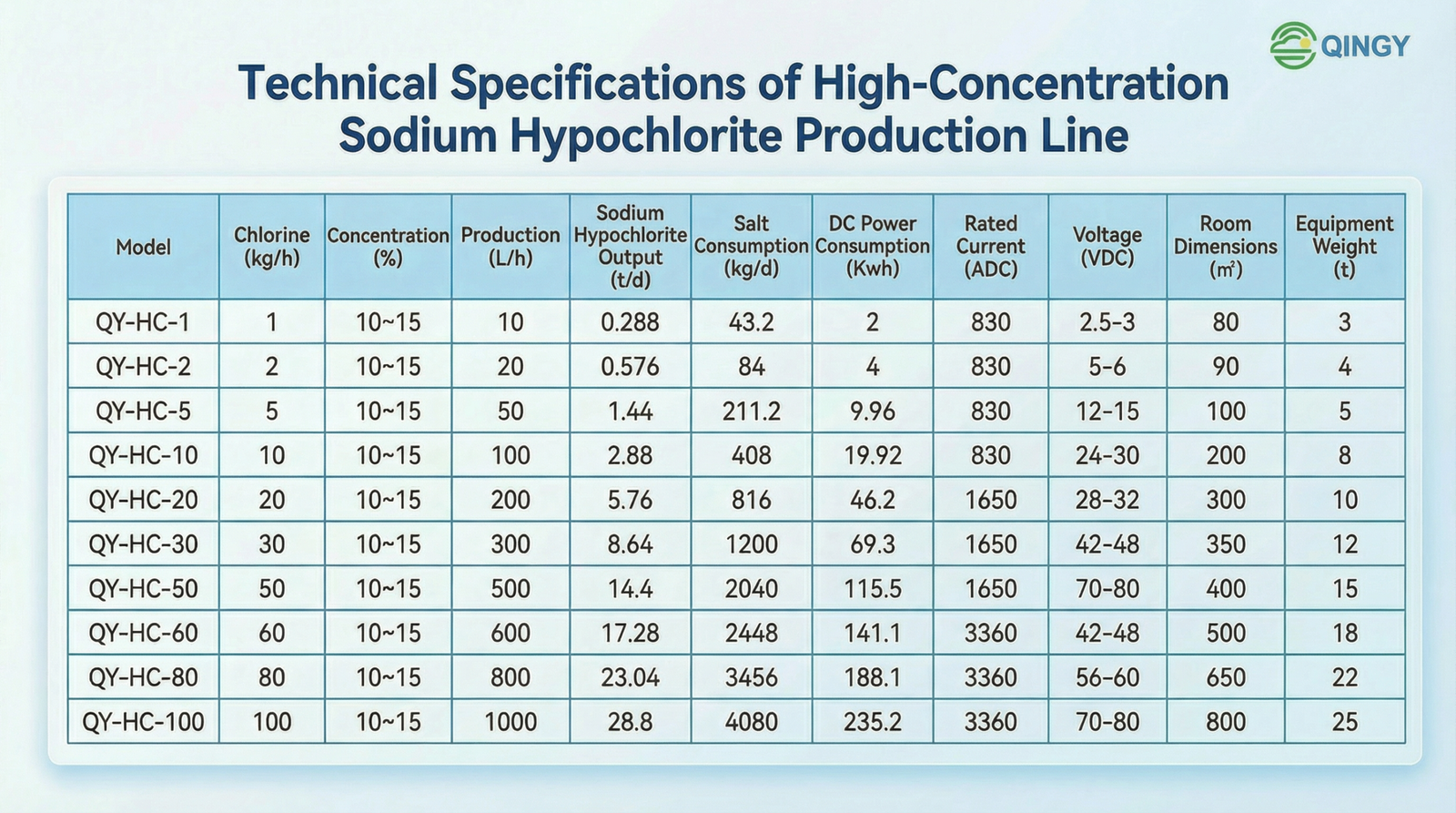
Production Capacity 3 tons/day (≈125 kg/h) of 10–15% NaClO
Active Chlorine Concentration 10%–15% (100–150 g/L)
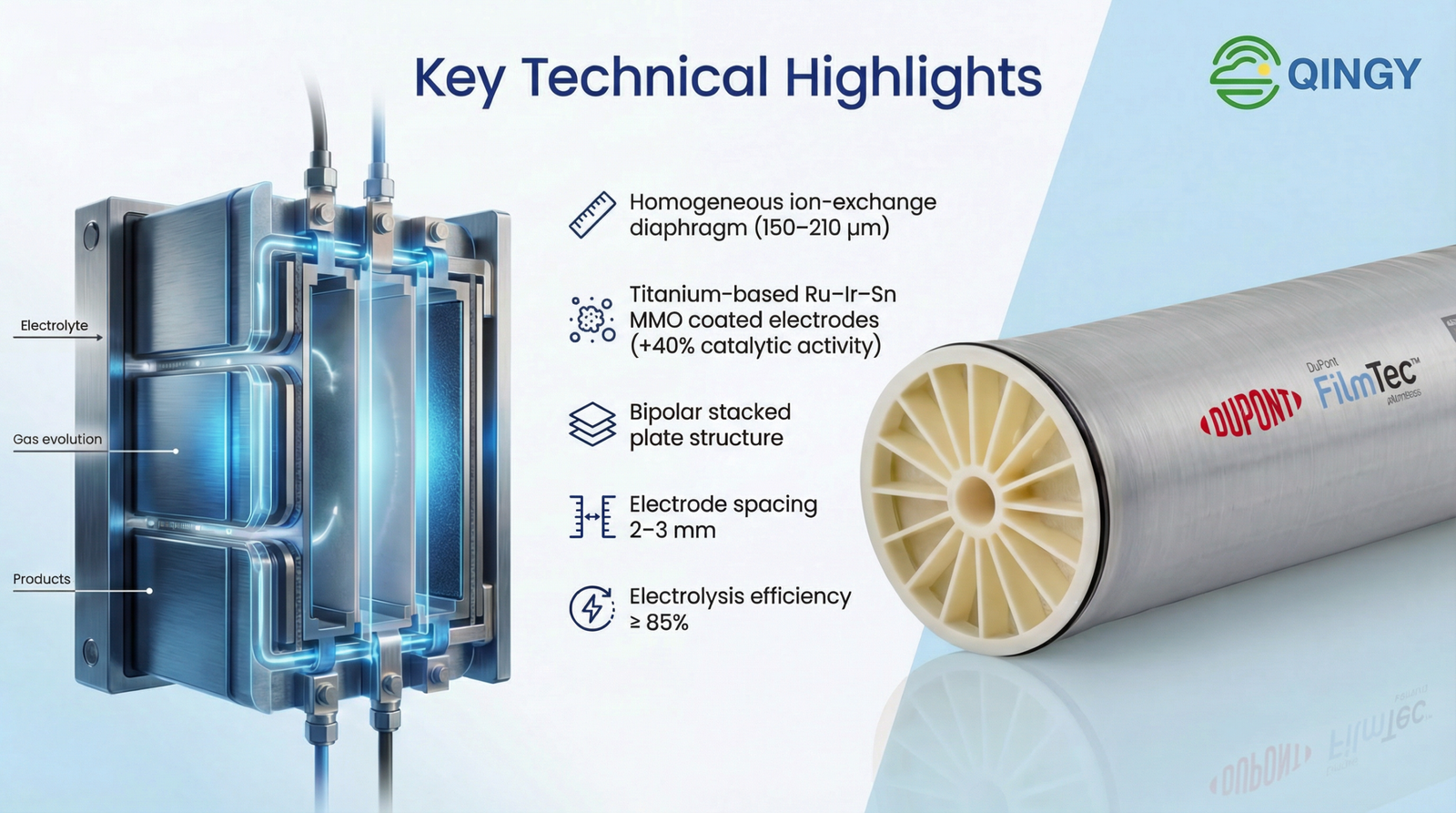
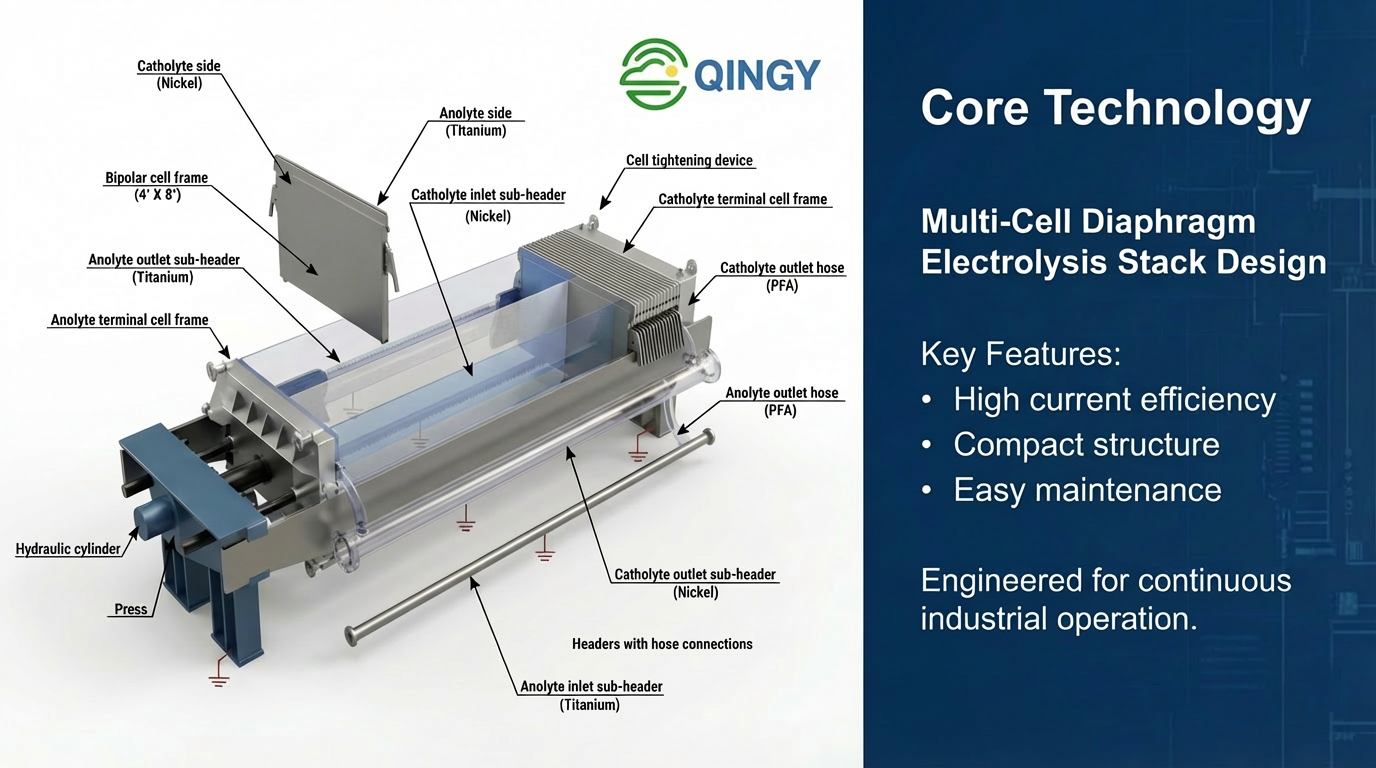
Electrolysis Method Membrane cell electrolysis
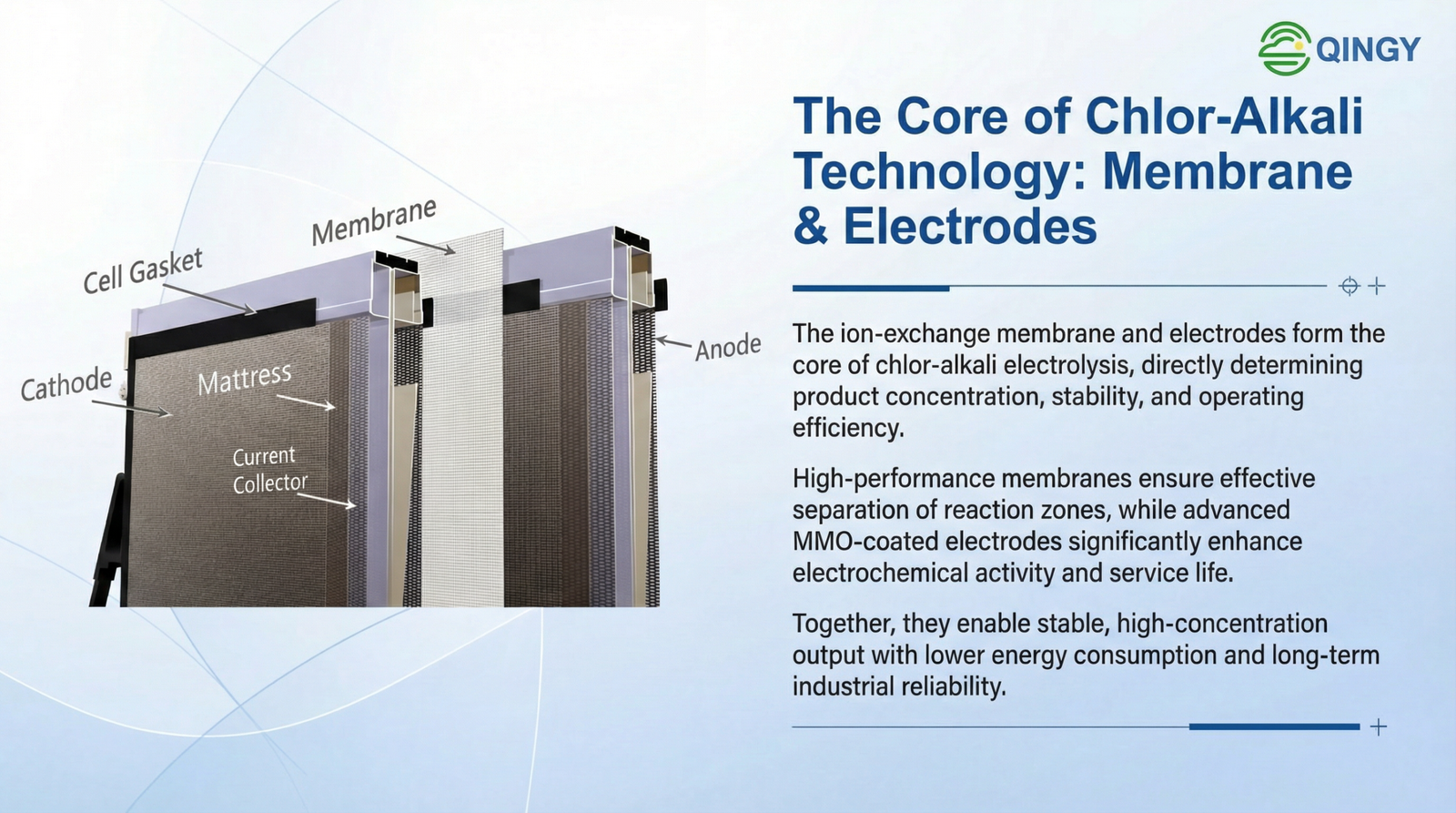
Electrode Material Titanium substrate with RuO₂/IrO₂ mixed metal oxide coating
Salt Consumption ≈3.2 kg NaCl per kg Cl₂ produced
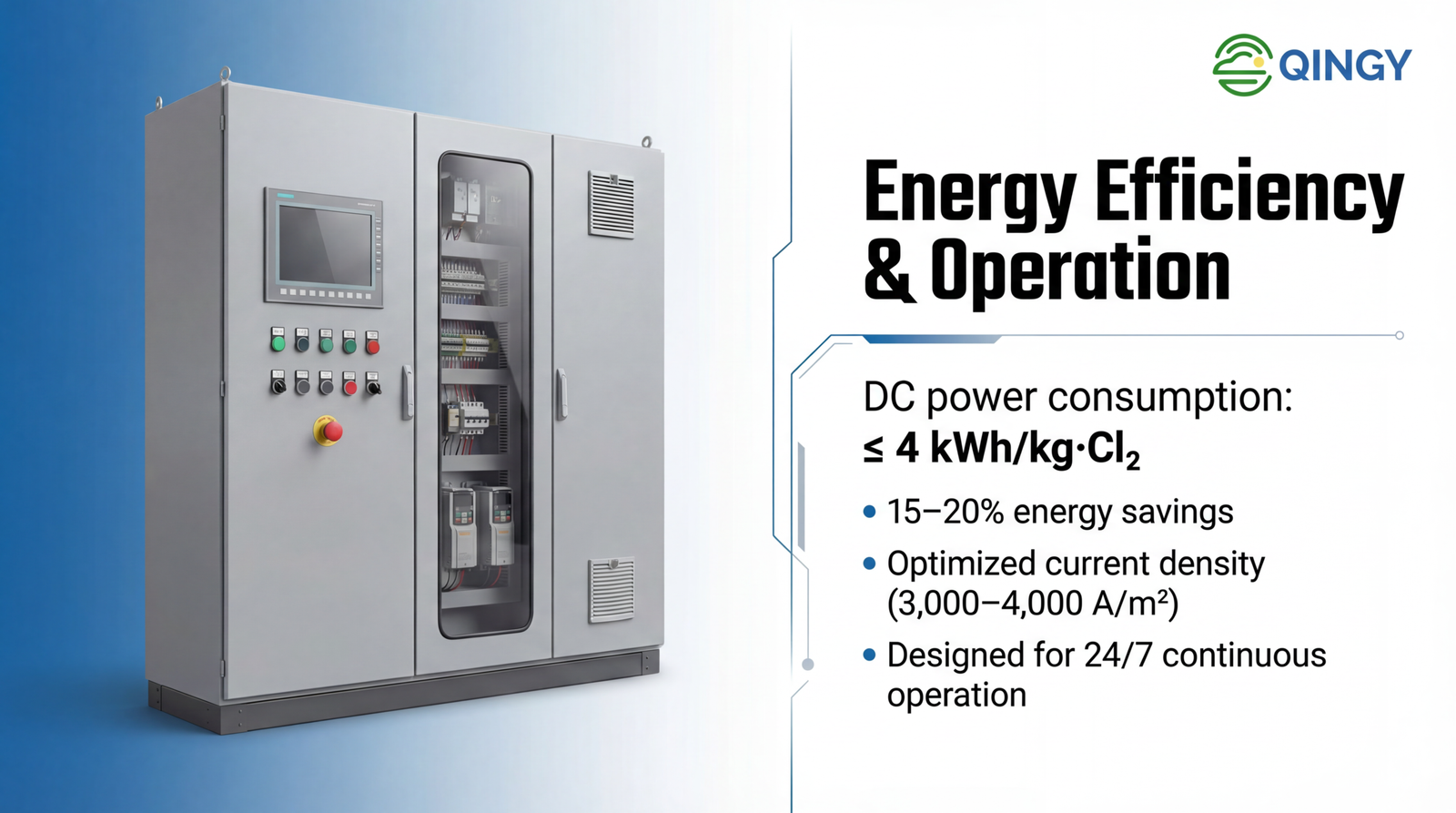
Power Consumption ≈4.5 kWh per kg Cl₂
Feed Water Requirement Softened water (hardness <1°dH) at 2–4 bar
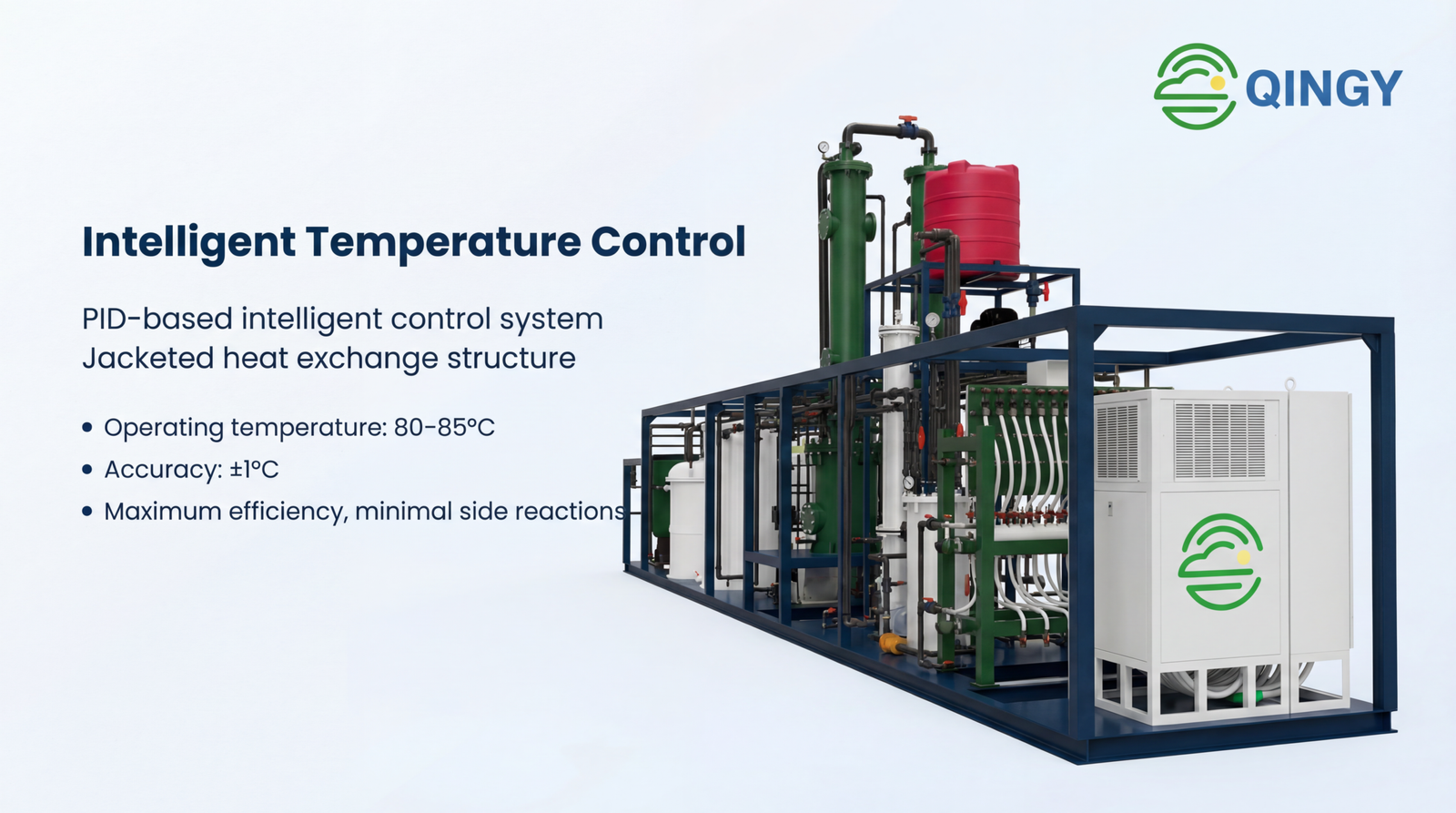
Cooling Method Integrated plate heat exchanger with recirculating chilled water
Control System PLC + 10″ HMI touchscreen, Modbus TCP/IP, optional 4G remote
Operating Temperature 15–35°C ambient; electrolyte controlled at 25–40°C
Footprint ≈10 m² (main skid: 4.5 × 2.2 × 2.4 m)
Weight (dry) ≈2,500 kg
Certifications CE, UL, IEC, NSF/ANSI 60, ATEX (optional)

How the Membrane Electrolysis Process Works

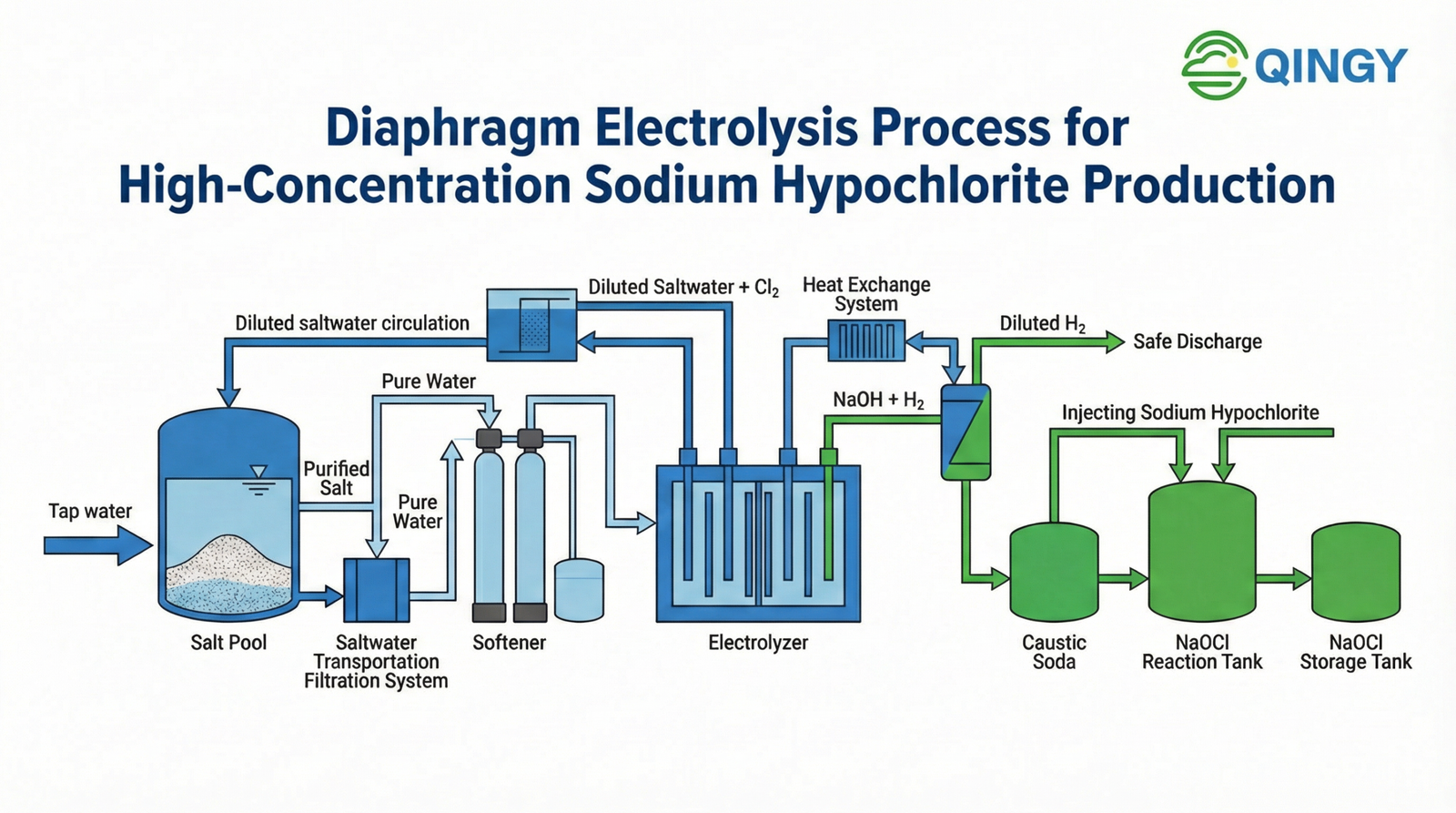
QINGY’s membrane electrolysis technology separates the anode and cathode chambers with a selectively permeable membrane, producing high-purity NaClO with minimal chlorate byproduct (<5 g/L). The process involves four key stages:

  1. Brine Preparation: Food-grade salt dissolved in softened water to ~300 g/L NaCl saturation.
  2. Dilution & Filtration: Brine diluted to 2.5–3.5% and filtered to remove suspended solids.
  3. Electrolysis: DC current converts NaCl into NaClO. H₂ gas is safely separated and vented above roof level.
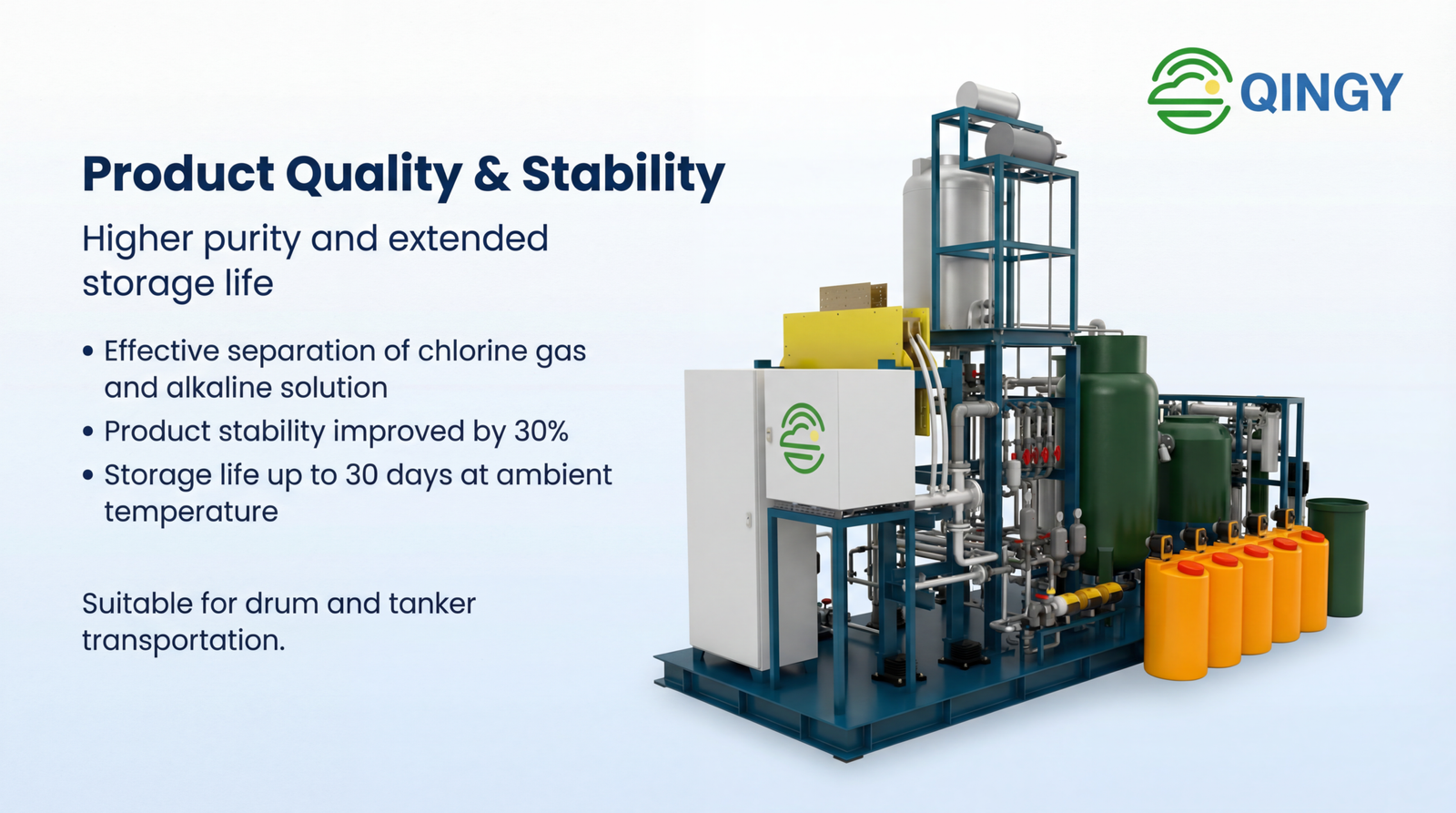
  4. Cooling & Storage: Product immediately cooled to <25°C and stored in UV-protected HDPE tank (3–5 m³ included).

Key Advantages of the QINGY 3 t/d System

  • High concentration (10–15%): 3–5× stronger than non-membrane systems. Reduces storage volume by 60–80%.
  • Low chlorate (<5 g/L): Product stability up to 30 days at high concentration, even in tropical climates.
  • Energy savings: 4.5 kWh/kg Cl₂ vs 6–8 kWh/kg for non-membrane systems. Annual energy savings of $3,000–8,000.
  • Full automation: PLC auto-start/stop based on tank level, automatic electrode cleaning cycle, self-diagnosis alerts.
  • Remote monitoring: Optional 4G module provides real-time data (production rate, power, temperature, alarms) via web dashboard.
  • Scalable design: Multiple 3 t/d units can be paralleled for larger installations (e.g., 3×3 t/d = 9 t/d total).
  • Long electrode life: Premium electrode coating lasts 8–15 years before recoating is needed.

Typical Applications

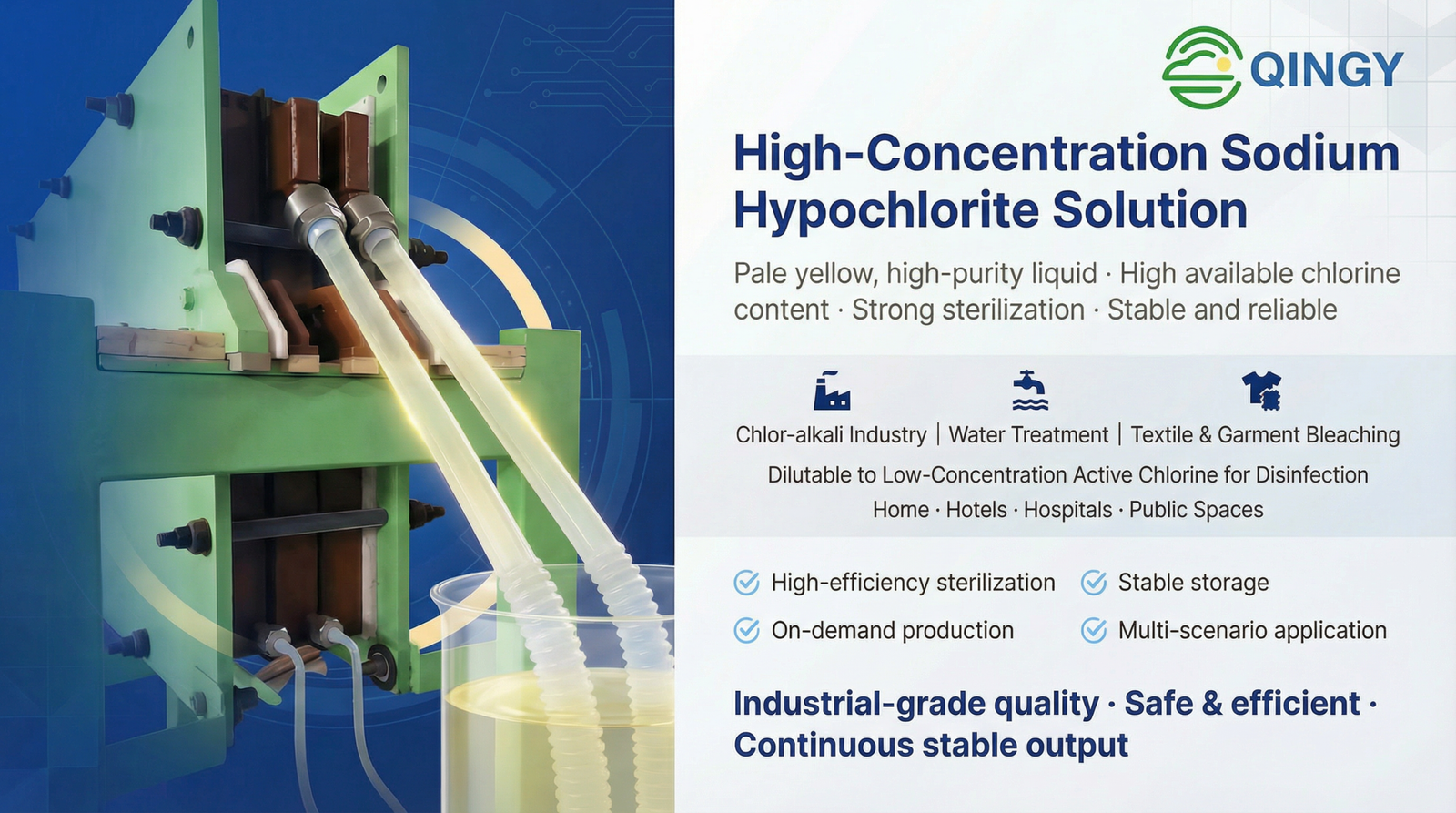
  • Municipal drinking water treatment (20,000–100,000 m³/d flow rates)
  • Industrial process water disinfection (food & beverage, pharmaceutical)
  • Cooling tower disinfection for power plants and data centers
  • Wastewater treatment plant final effluent disinfection
  • Hospital and healthcare facility water systems
  • Livestock farm water disinfection and biosecurity
  • Aquaculture water treatment and biosecurity

Installation Requirements

  • Indoor installation in a well-ventilated equipment room
  • Level concrete floor with floor drain and chemical-resistant coating
  • Electrical: 380V/3Ph/50Hz, 63A breaker (or 220V/60Hz per region)
  • Water supply: softened water at 2–4 bar, conductivity <500 μS/cm
  • Ventilation: mechanical exhaust (min 10 air changes/hour) for H₂ safety
  • Salt storage: dry, covered area for 1–2 tons of salt
  • NaClO storage: 3–5 m³ HDPE tank included (or connect to existing tank)

Maintenance Schedule

Frequency Task
Daily Check salt level, verify production output, inspect for alarms
Weekly Clean brine tank sediment, inspect electrode surface condition
Monthly Clean heat exchanger plates, verify dosing pump calibration
Quarterly Full system inspection, check all valves and fittings
Annually Replace wear parts (O-rings, gaskets, filter elements)
8–15 years Electrode recoating or replacement

Comparison: QINGY 3 t/d vs. Conventional Systems

Feature QINGY 3 t/d (Membrane) Non-Membrane 3 t/d Delivered NaClO (10%)
Concentration 10–15% 0.3–0.8% 10–12% (degrades)
Power per kg Cl₂ 4.5 kWh 6–8 kWh N/A (transport)
Chlorate level <5 g/L 15–30 g/L 10–20 g/L
Storage volume Small Very large Large + degradation
Shelf life 30 days 3–7 days 7–14 days
Operator needed No (auto) Partial No
Chemical transport None None Required (hazardous)

FAQ

Can I install multiple units in parallel?

Yes. The 3 t/d model is designed for parallel operation. For example, a 100,000 m³/d water plant might install 3 units for redundancy (2 operating + 1 standby). The PLC systems can be linked for coordinated operation.

What happens if the power fails?

The PLC automatically saves all operating parameters. When power resumes, the system auto-restarts and resumes production. The stored NaClO in the tank provides continued disinfection during the restart period.

How does this compare to buying delivered chlorine?

On-site generation eliminates hazardous chemical transport, eliminates delivery costs, ensures fresh product (no degradation), and typically achieves 30–50% lower cost per kg Cl₂ over the system lifetime. Payback period is typically 18–36 months.

What support does QINGY provide?

We provide free system design consultation, remote commissioning support (video-guided), optional on-site installation supervision, 24/7 remote technical support, and lifetime spare parts availability. All systems come with a 1-year warranty on major components.