1 td High-Concentration Sodium Hypochlorite (10%-15%)
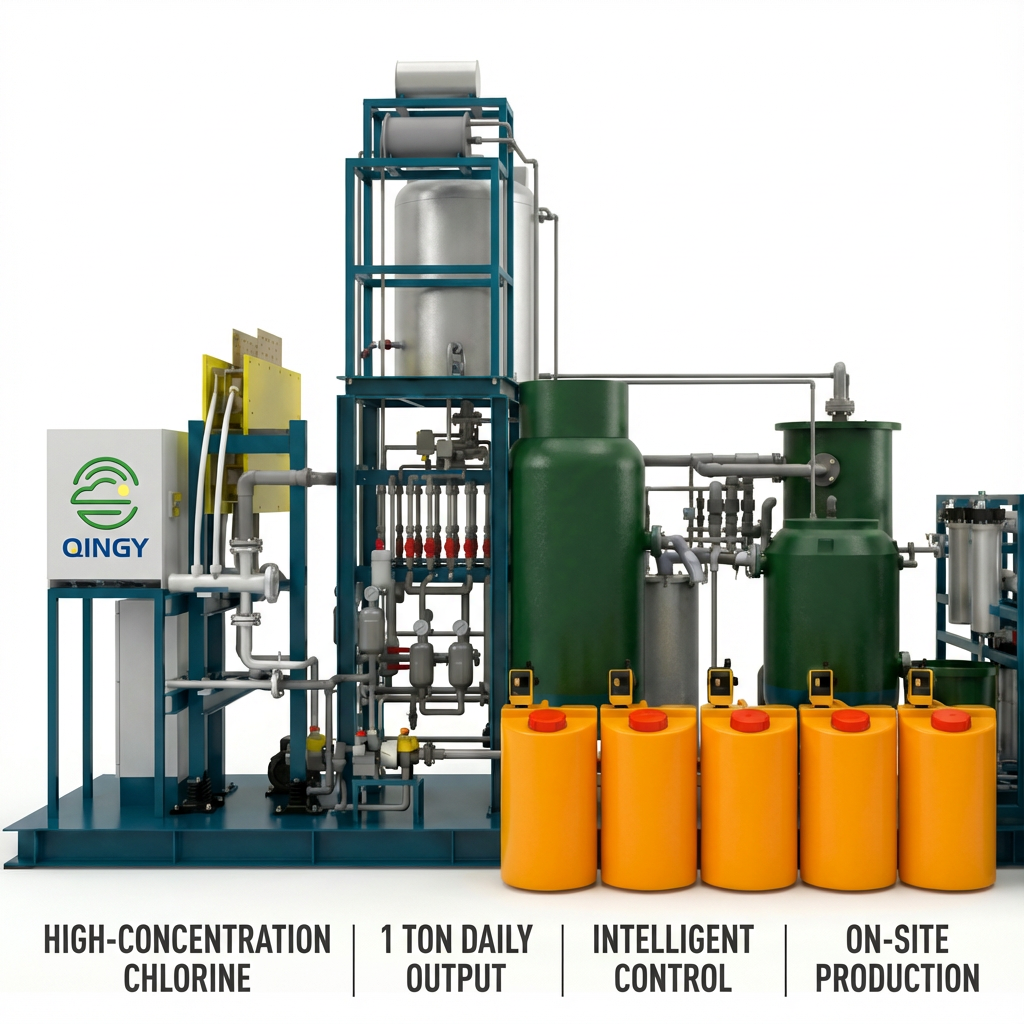
1 t/d membrane electrolysis sodium hypochlorite generator producing 10-15% NaClO. PLC-controlled, compact design. Ideal for municipal water, hospitals, and industrial disinfection. CE, NSF, ATEX certified.
Product Details
1 t/d High-Concentration Sodium Hypochlorite Generator – Overview
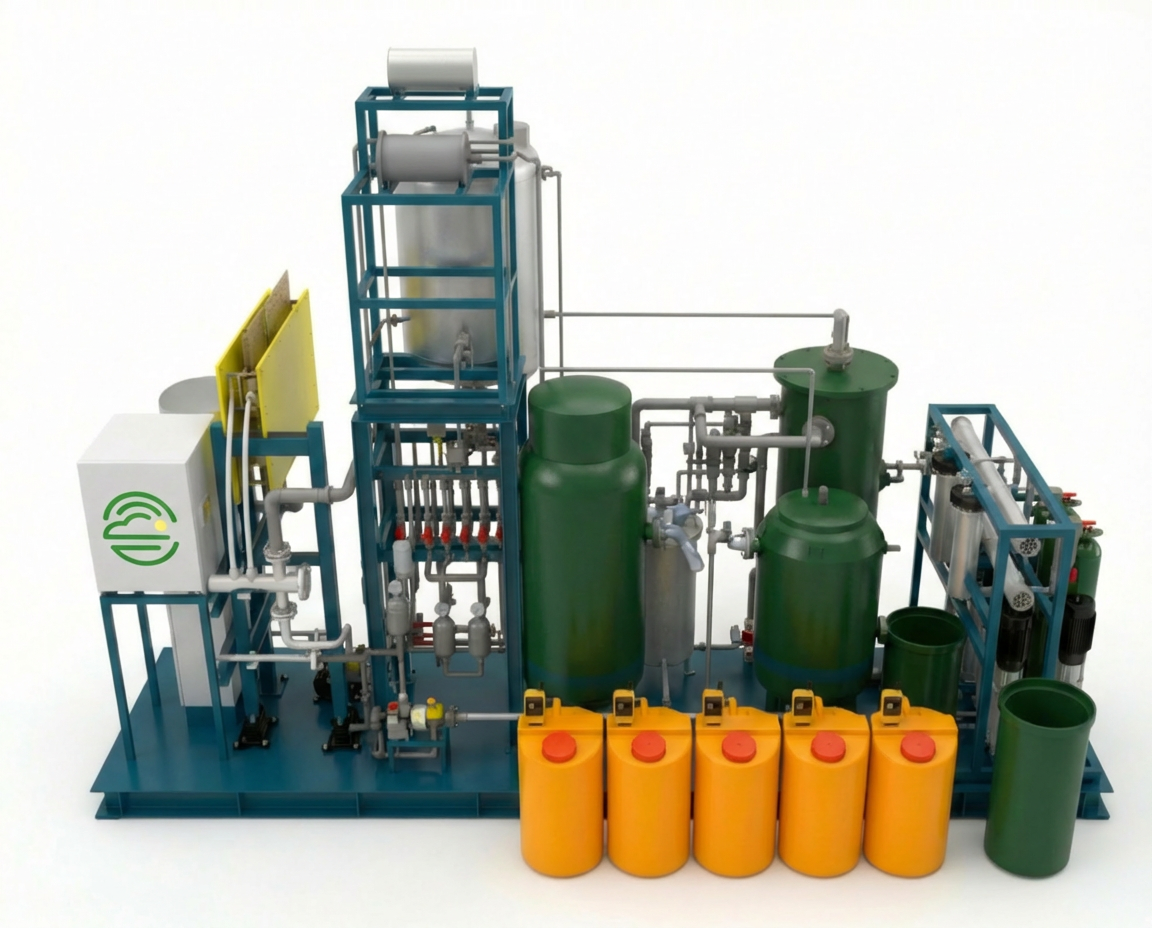
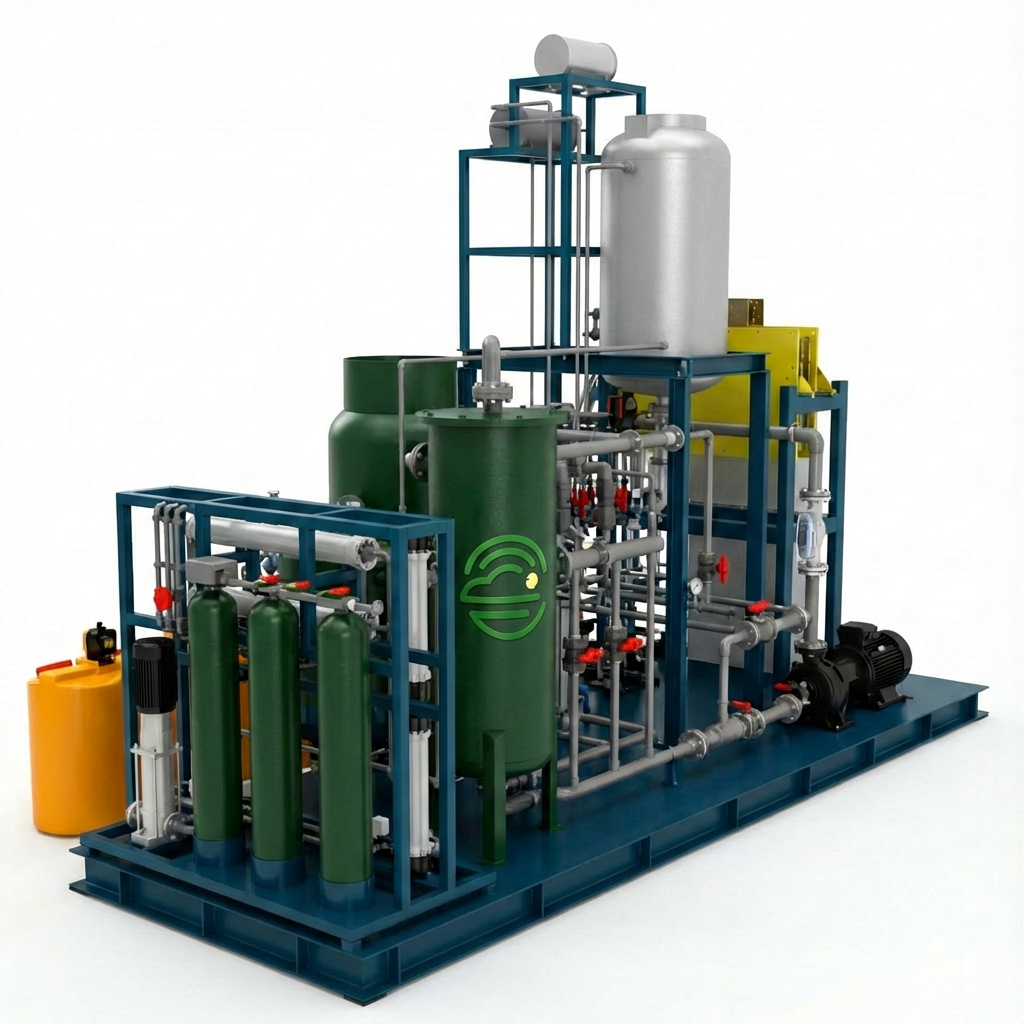
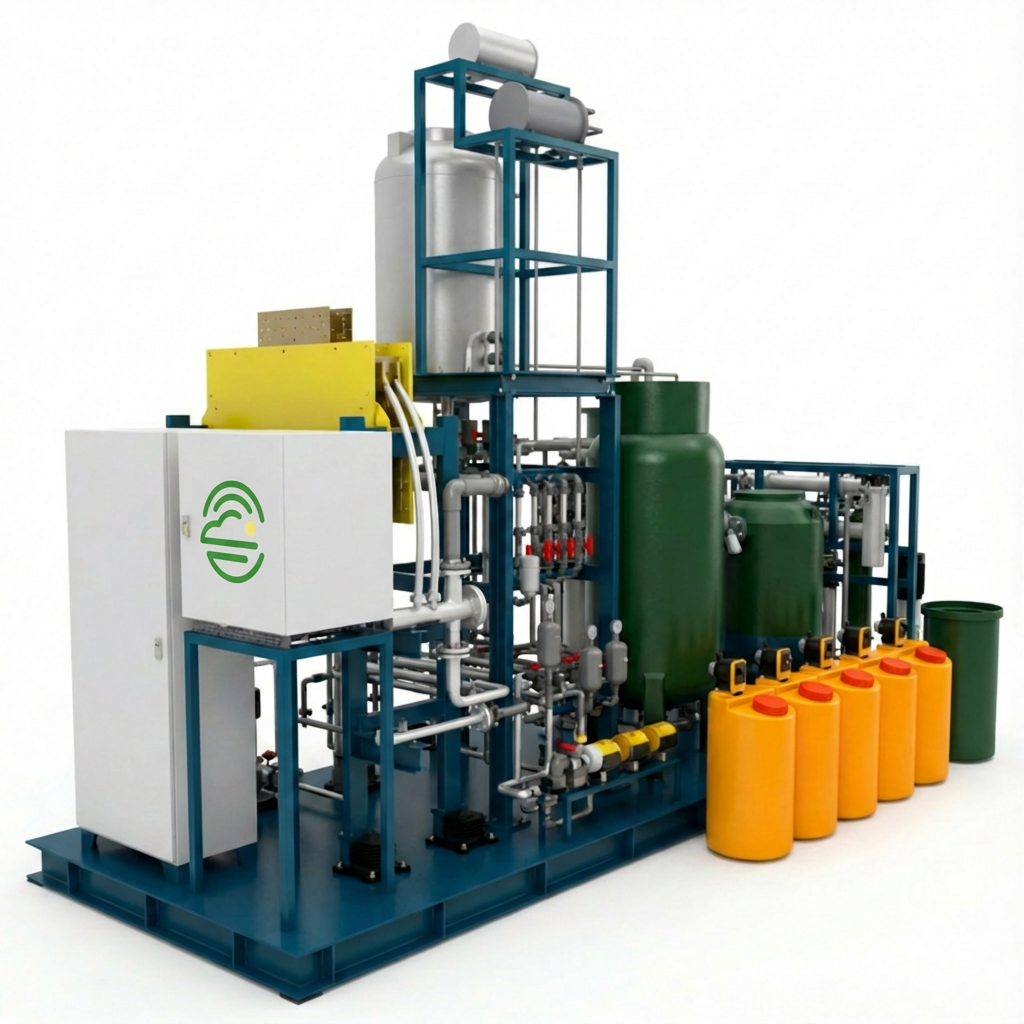
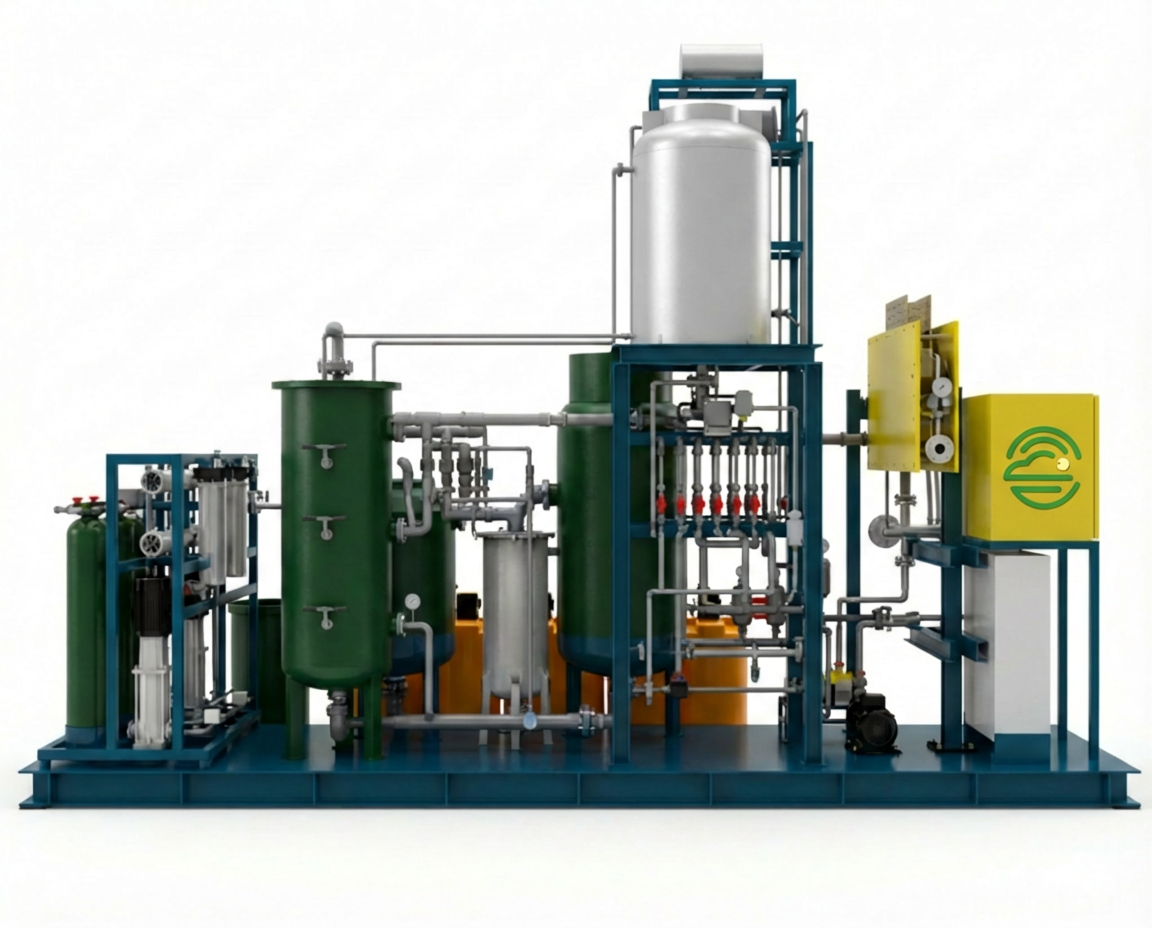
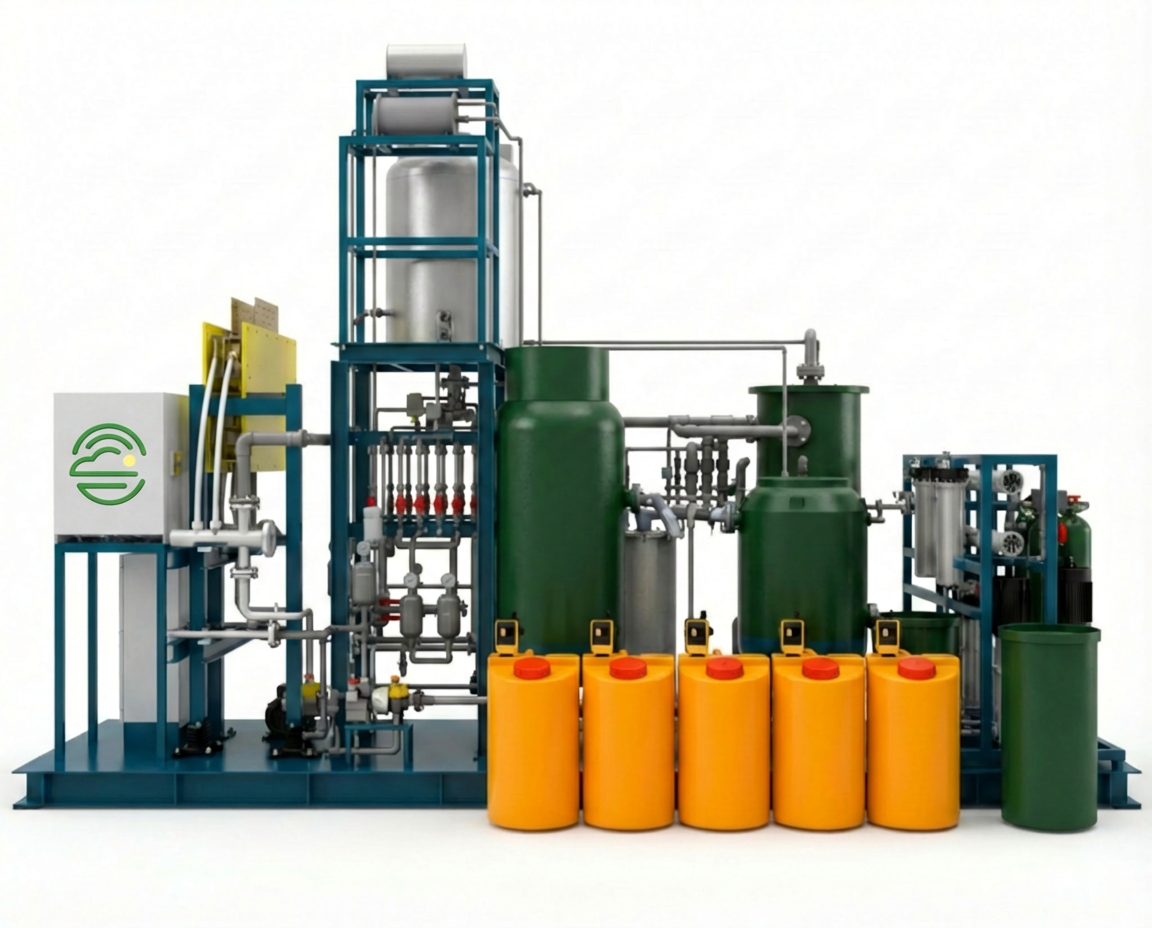
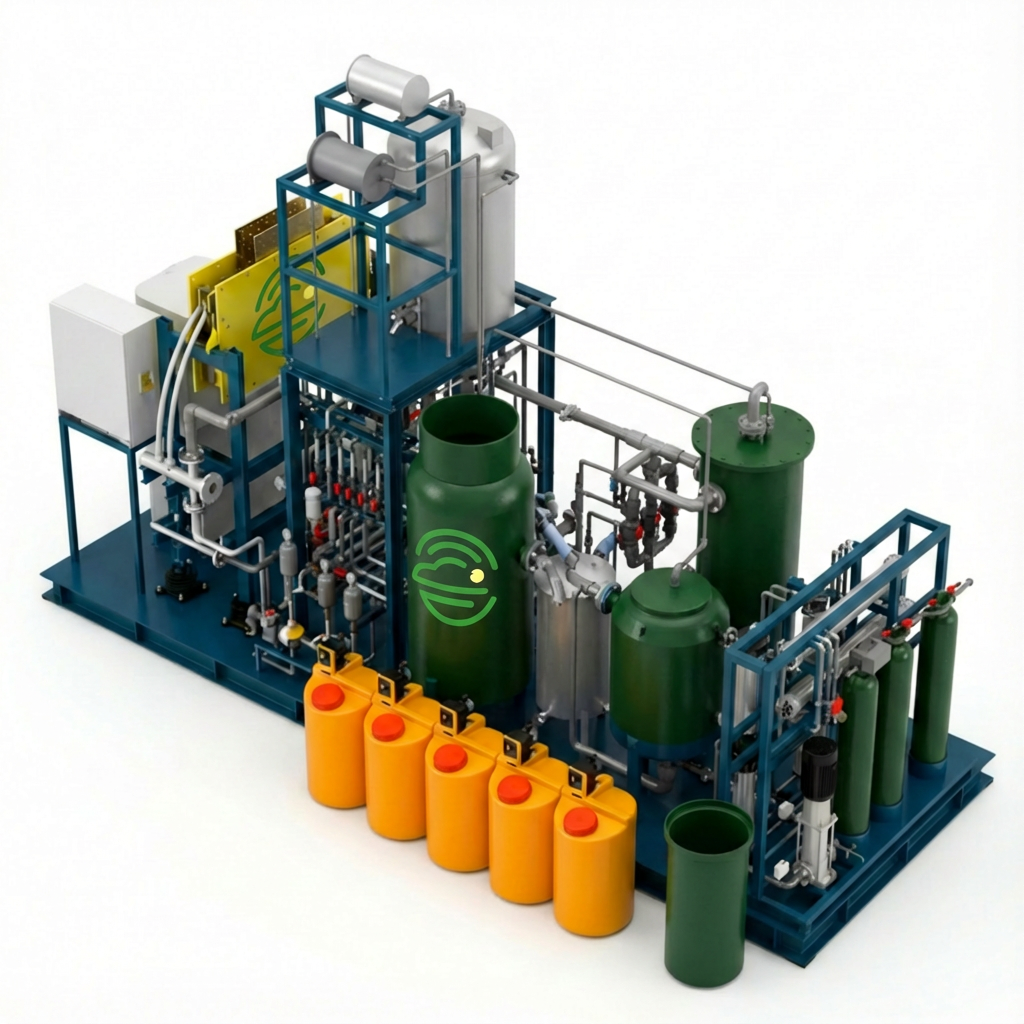
The QINGY 1 t/d high-concentration sodium hypochlorite generator is a compact, membrane-based electrolysis system designed to produce 10%–15% NaClO solution on-site at a rate of approximately 1 kg/h (25 kg/h active chlorine equivalent). Ideal for small-to-medium municipal water treatment plants, rural drinking water projects, swimming pools, hospitals, and industrial facilities that require reliable, on-demand disinfection without storing hazardous chemicals.
Technical Specifications
| Parameter | Value |
|---|---|
| Production Capacity | 1 ton/day (≈42 kg/h) of 10–15% NaClO |
| Active Chlorine Concentration | 10%–15% (100–150 g/L) |
| Electrolysis Method | Membrane cell electrolysis |
| Electrode Material | Titanium substrate with RuO₂/IrO₂ mixed metal oxide coating |
| Salt Consumption | ≈3.2 kg NaCl per kg Cl₂ produced |
| Power Consumption | ≈4.5 kWh per kg Cl₂ |
| Feed Water Requirement | Softened water or filtered brine (hardness <1°dH) |
| Cooling Method | Integrated plate heat exchanger with recirculating chilled water |
| Control System | PLC + HMI touchscreen, remote monitoring via Modbus/SCADA |
| Operating Temperature | 15–35°C (ambient); electrolyte controlled at 25–40°C |
| Footprint | ≈6 m² (main skid: 3.0 × 2.0 × 2.2 m) |
| Weight (dry) | ≈1,200 kg |
| Certifications | CE, UL, IEC, NSF/ANSI 60, ATEX (optional explosion-proof) |
How the Membrane Electrolysis Process Works
Unlike traditional diaphragm or non-membrane cells, QINGY’s membrane electrolysis technology uses a selectively permeable membrane to separate the anode and cathode chambers. This produces higher-purity sodium hypochlorite with significantly lower chlorate byproduct formation (<5 g/L), extending shelf life and reducing maintenance frequency.
- Brine Preparation: Food-grade salt (NaCl ≥99.5%) is dissolved in softened water to create a saturated brine solution (~300 g/L NaCl).
- Brine Dilution: The saturated brine is diluted to the optimal concentration (2.5–3.5% NaCl) before entering the electrolysis cell.
- Electrolysis: DC current passes through the membrane cell, converting NaCl solution into NaClO at the anode while generating H₂ gas at the cathode (safely vented).
- Cooling & Storage: The produced NaClO is immediately cooled to <25°C and stored in a UV-protected HDPE tank with automatic level control.
Key Advantages of the QINGY 1 t/d System
- High concentration output (10–15%): 3–5× stronger than conventional non-membrane generators, reducing storage volume and dosing pump sizes.
- Low chlorate formation: Membrane technology keeps chlorate below 5 g/L, ensuring product stability for up to 30 days even at high concentration.
- Energy efficient: 30–40% lower power consumption per kg Cl₂ compared to non-membrane systems.
- PLC automation: Fully automatic operation with self-diagnosis, remote monitoring, and SCADA integration. No dedicated operator required.
- Compact footprint: All-in-one skid-mounted design fits in a 6 m² equipment room.
- Long electrode life: Premium RuO₂/IrO₂ coating on titanium substrate delivers 8–15 years of service before recoating.
Typical Applications
- Municipal drinking water treatment (flow rates up to 20,000 m³/d)
- Rural and small-community water supply systems
- Hospital and healthcare facility disinfection
- Swimming pool and water park sanitation
- Food & beverage processing plant CIP disinfection
- Livestock and aquaculture water treatment
- Small cooling tower systems
Installation Requirements
- Indoor installation in a ventilated, frost-free equipment room (min 5°C, max 40°C)
- Level concrete floor with floor drain
- Electrical supply: 380V/3Ph/50Hz, 16A breaker (or 220V/60Hz per region)
- Feed water: softened water supply (hardness <1°dH) at 2–4 bar pressure
- Ventilation: mechanical exhaust for H₂ gas dispersion (per local codes)
- Salt storage: dry area for 20–50 bags of salt (25 kg each)
Maintenance & Consumables
The QINGY 1 t/d system is designed for minimal maintenance:
- Daily: Visual inspection, check salt level, verify dosing output
- Weekly: Clean brine tank sediment, inspect electrode condition
- Monthly: Check and clean heat exchanger, verify calibration of dosing pump
- Annually: Comprehensive system inspection, replace wear parts (O-rings, gaskets)
- Electrode recoating: Every 8–15 years depending on operating hours
Why Choose QINGY?
QINGY (Qingyang Technology) is a specialized manufacturer of high-concentration sodium hypochlorite generators with 15+ years of engineering expertise. Our systems are deployed in over 20 countries across municipal water, power generation, and industrial applications. Every unit is factory-tested before shipment and backed by comprehensive technical support, remote commissioning assistance, and lifetime spare parts availability.
FAQ
What is the difference between 10% and 15% concentration?
Higher concentration means less product volume needed per dose. 15% is preferred for larger systems where storage space is limited; 10% offers better stability in hot climates. We help you select based on your specific water quality and dosing requirements.
How long does it take to install?
Typical installation takes 3–5 days including plumbing, electrical connection, and commissioning. We provide remote supervision or on-site commissioning support.
Can the system operate unattended?
Yes. The PLC control system with auto-start/stop based on storage tank level means the generator runs fully unattended. Optional remote monitoring via Modbus/4G allows real-time status checking from your phone or SCADA.
What salt quality is required?
We recommend food-grade refined salt (NaCl ≥99.5%, particle size 2–5 mm). Avoid industrial salt with high calcium/magnesium content, as this increases maintenance frequency.