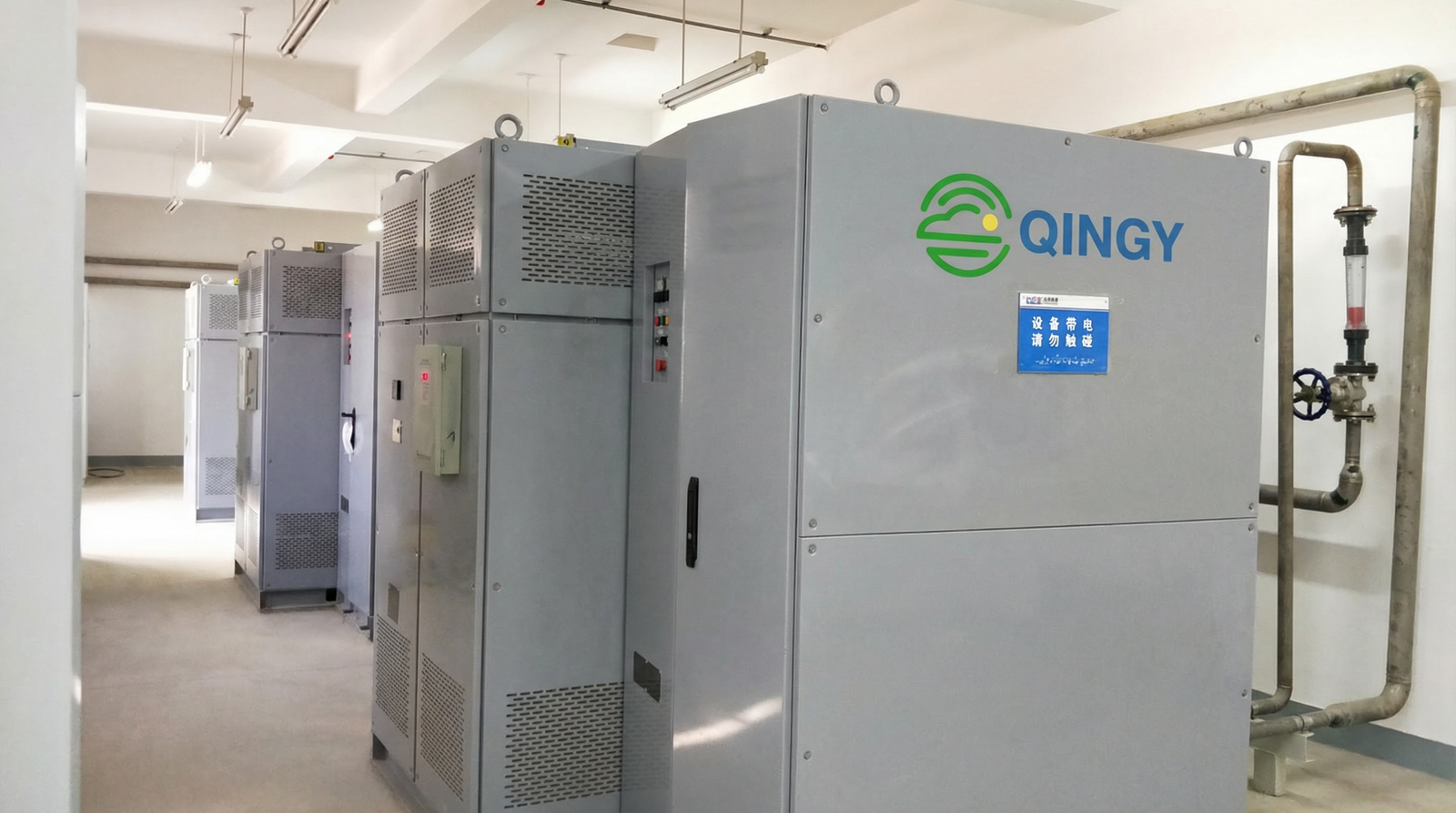
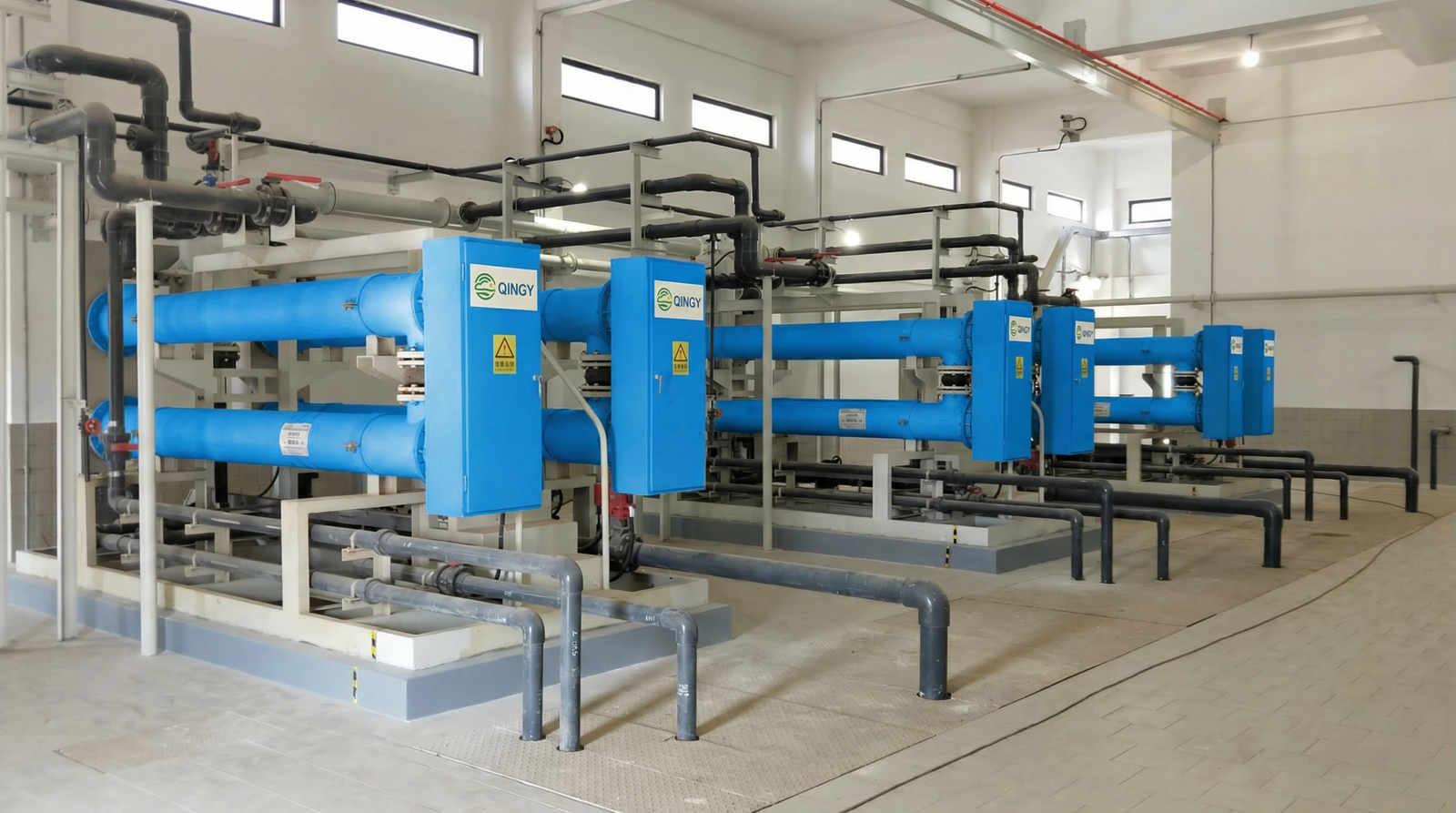
Seawater Electrolysis Chlorine Generation System
Seawater electrolysis chlorine generation system for coastal facilities. Direct seawater-to-NaClO conversion for biofouling control in power plants, desalination, and offshore platforms.
Product Details
Seawater Electrolysis Chlorine Generation System – Overview
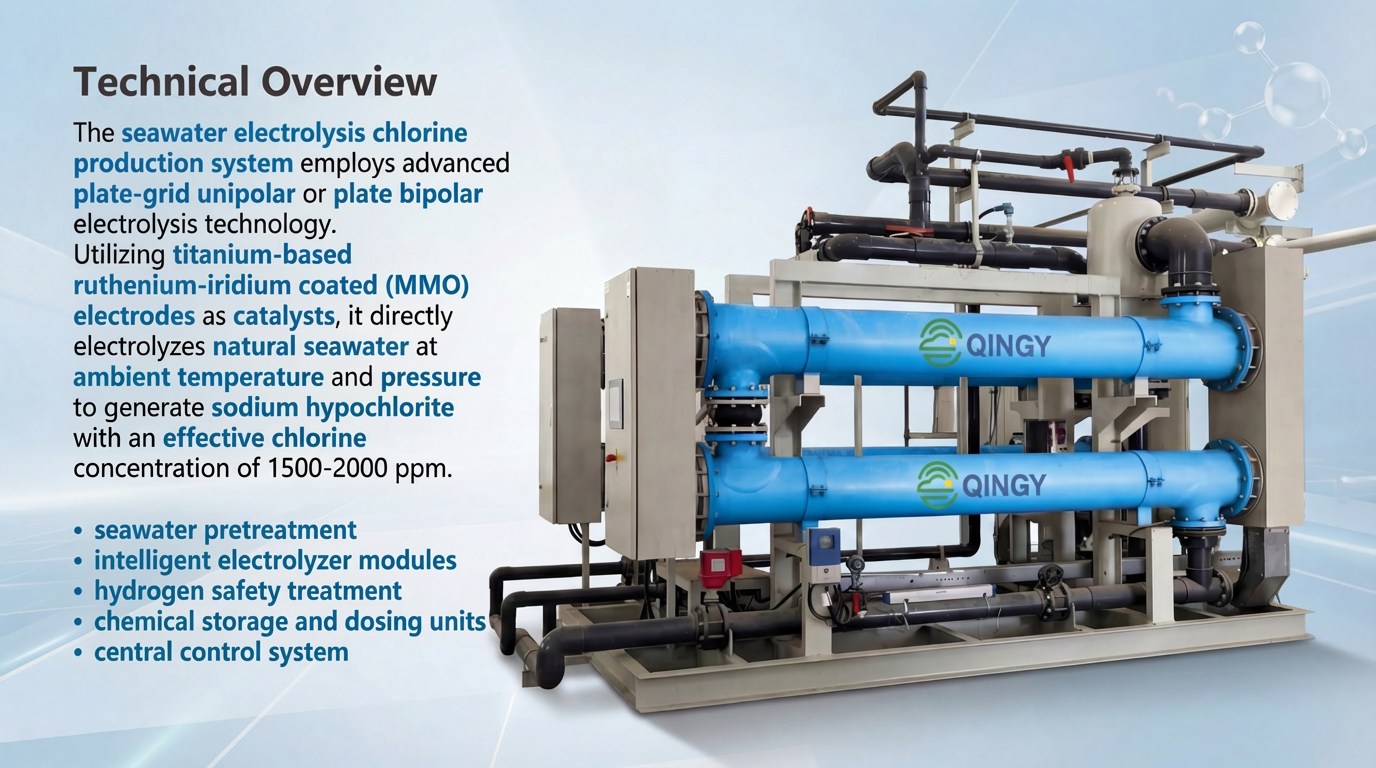
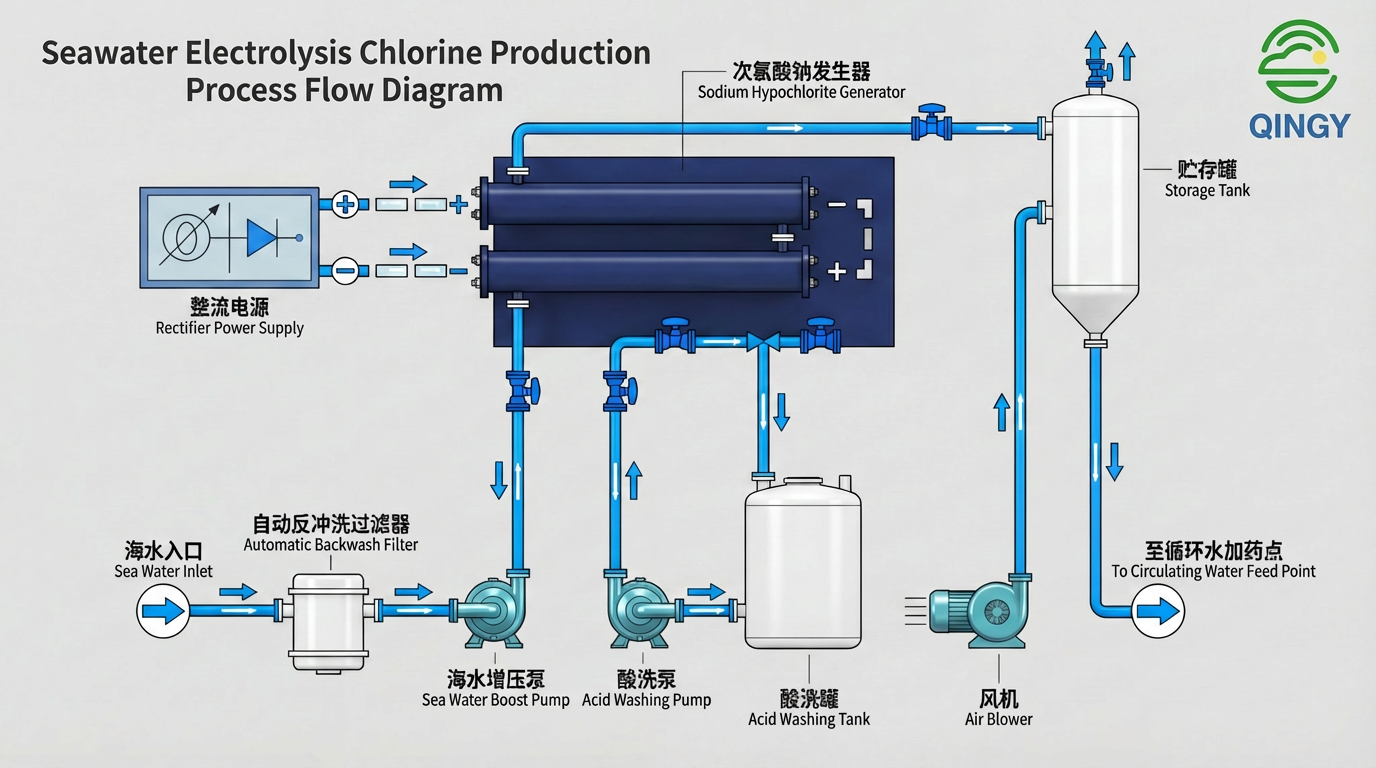
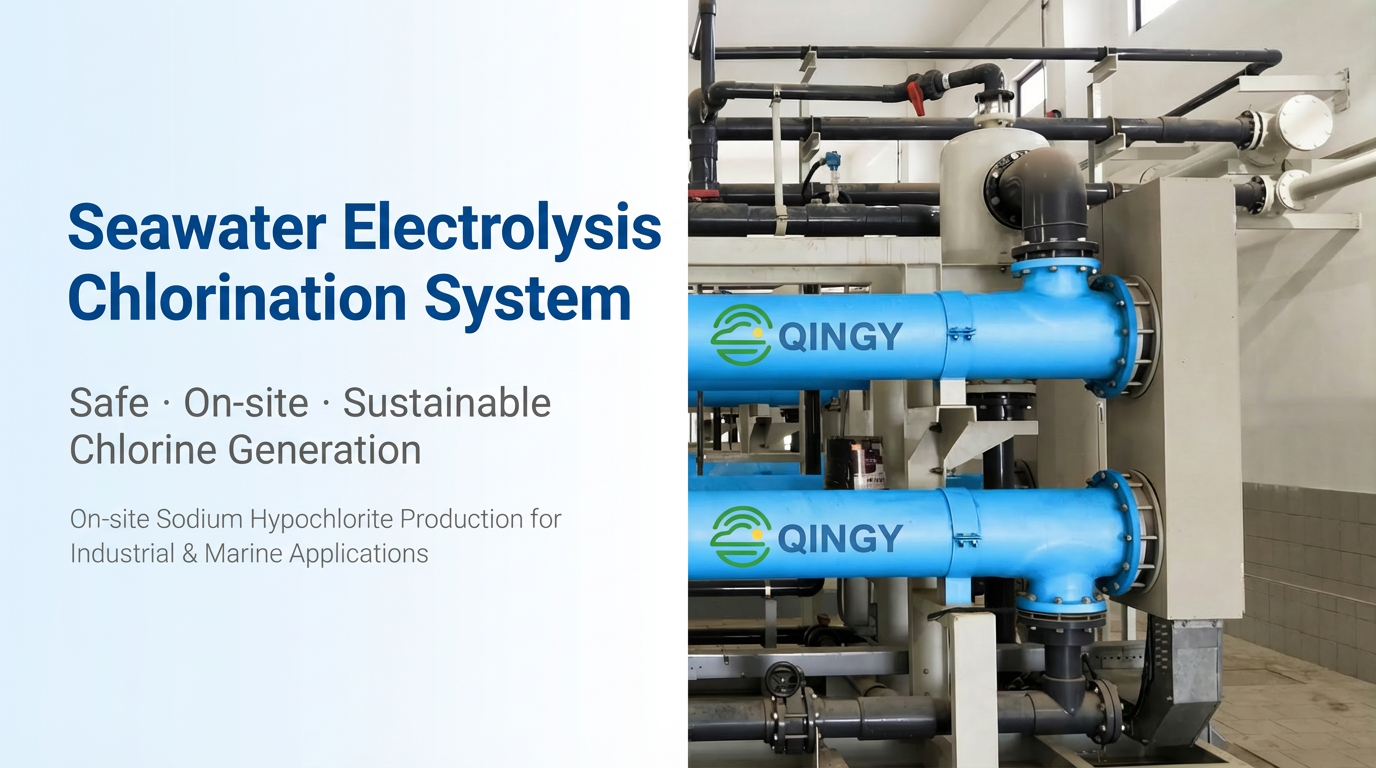
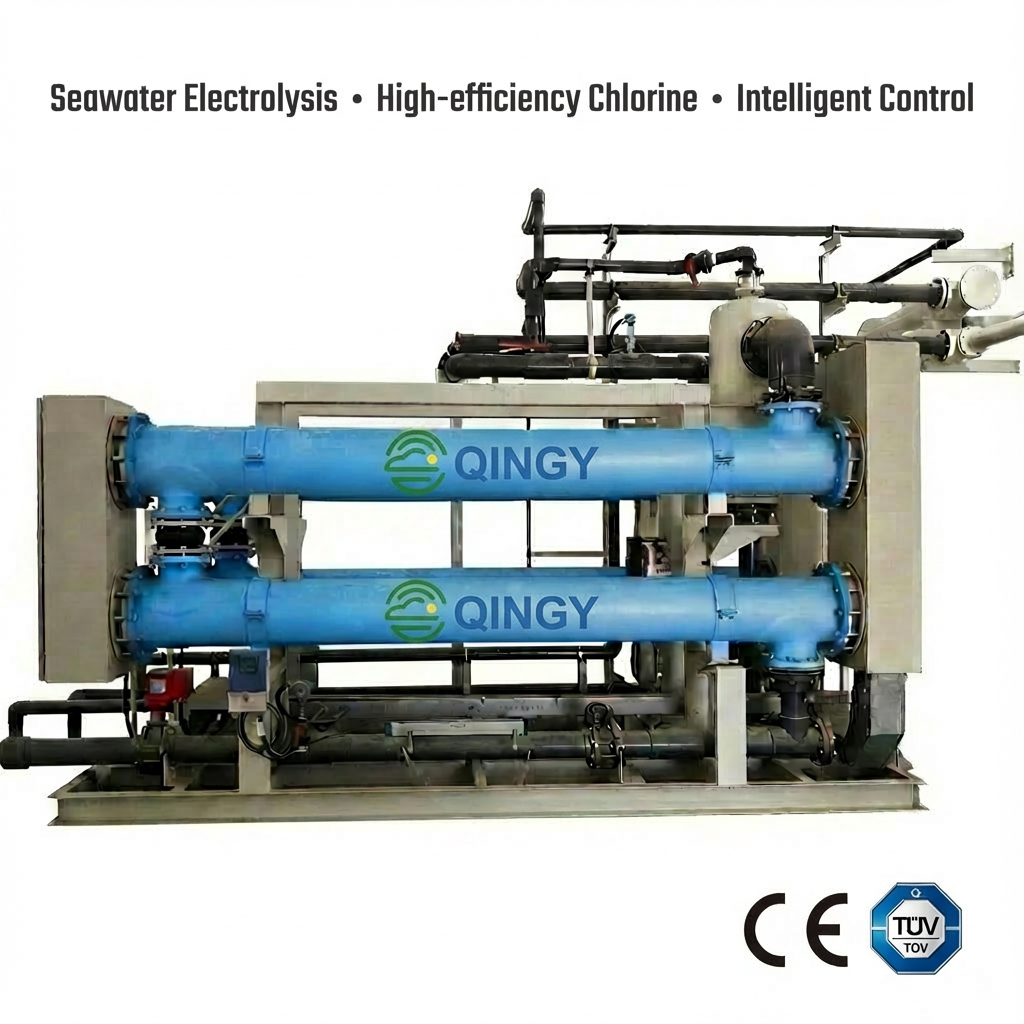
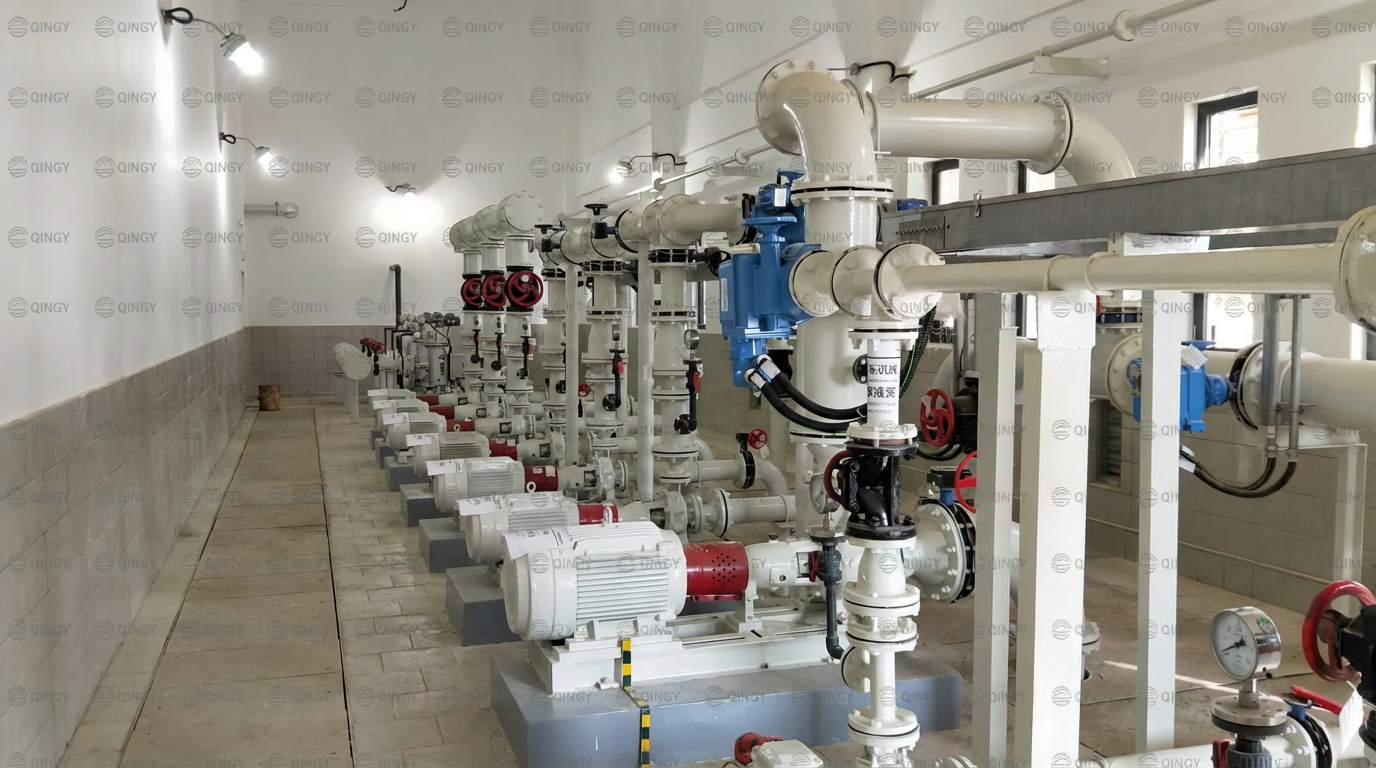
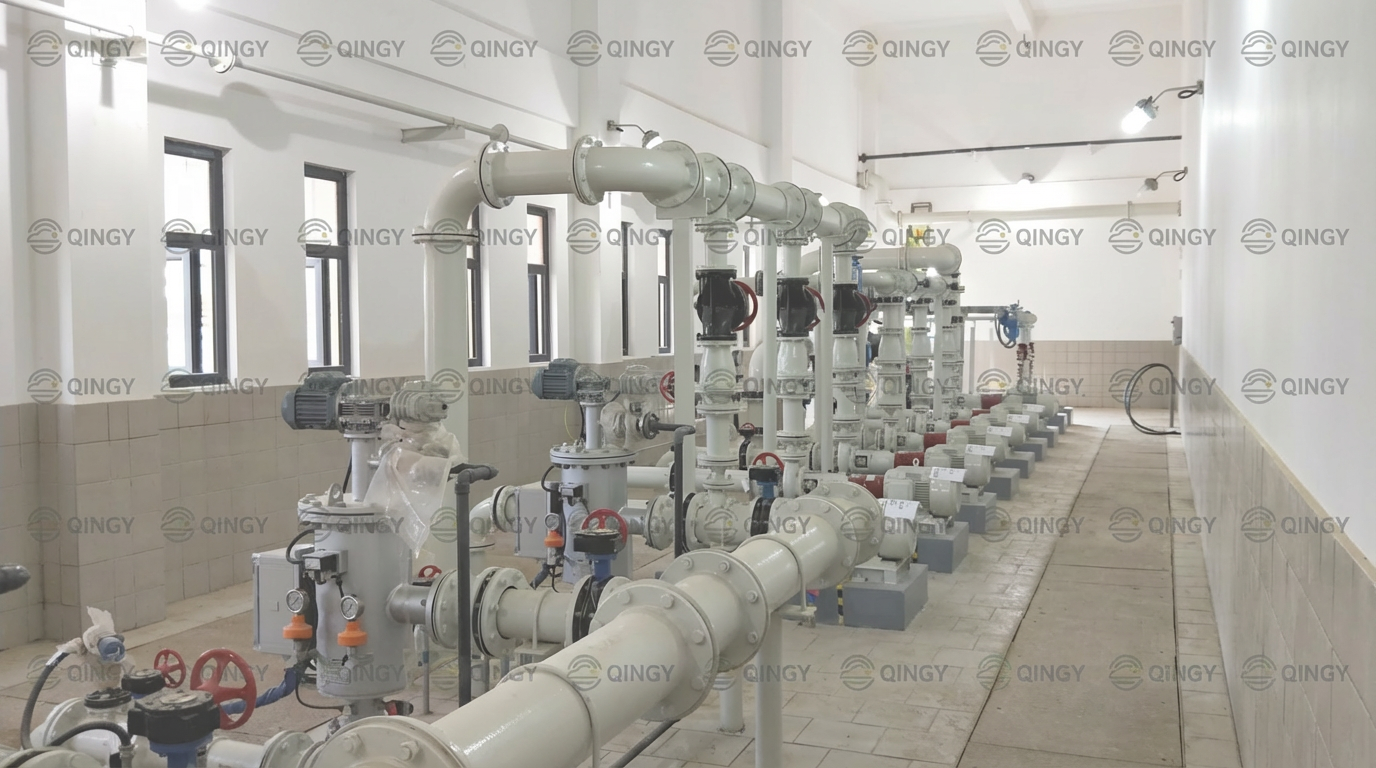
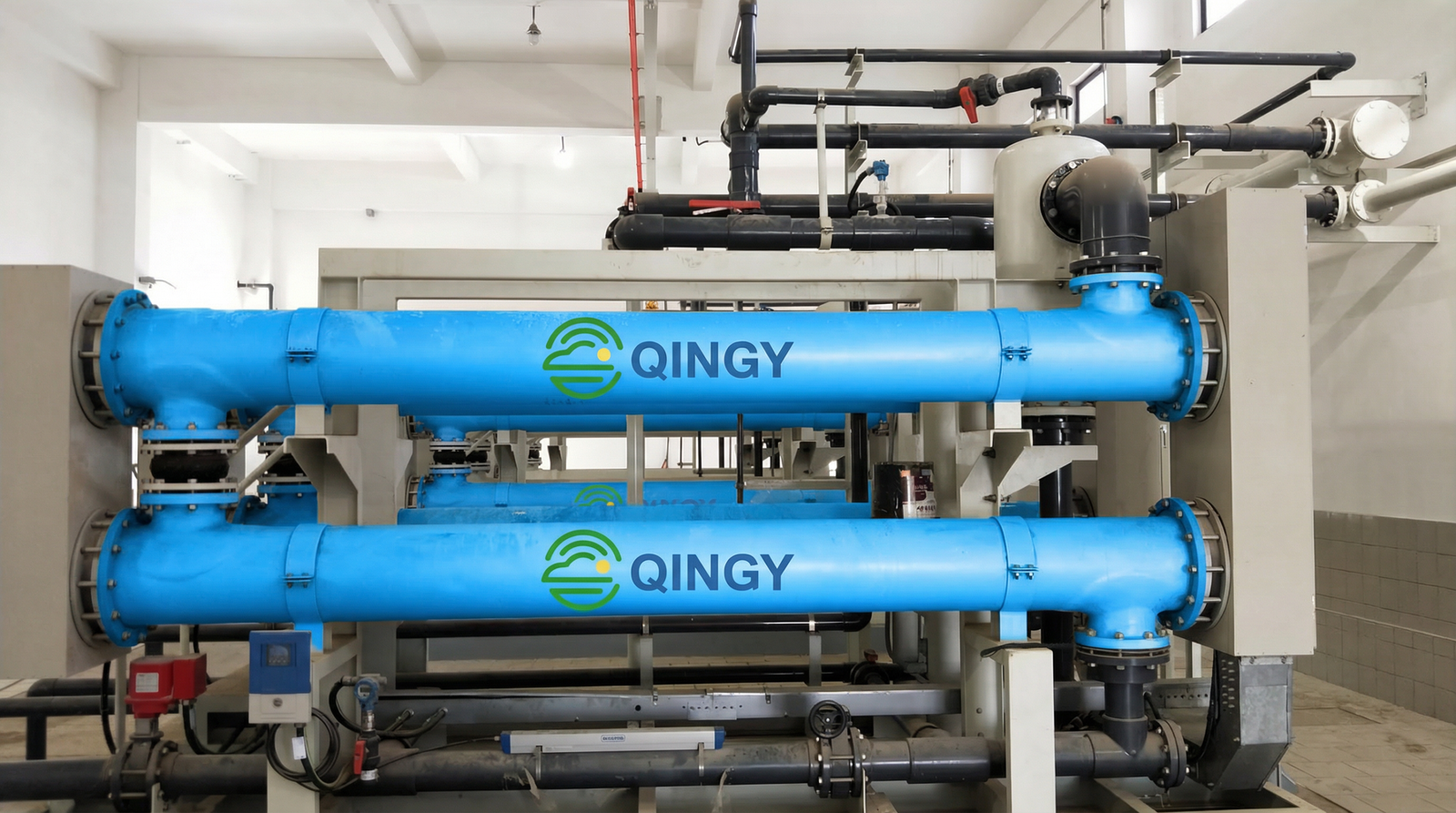
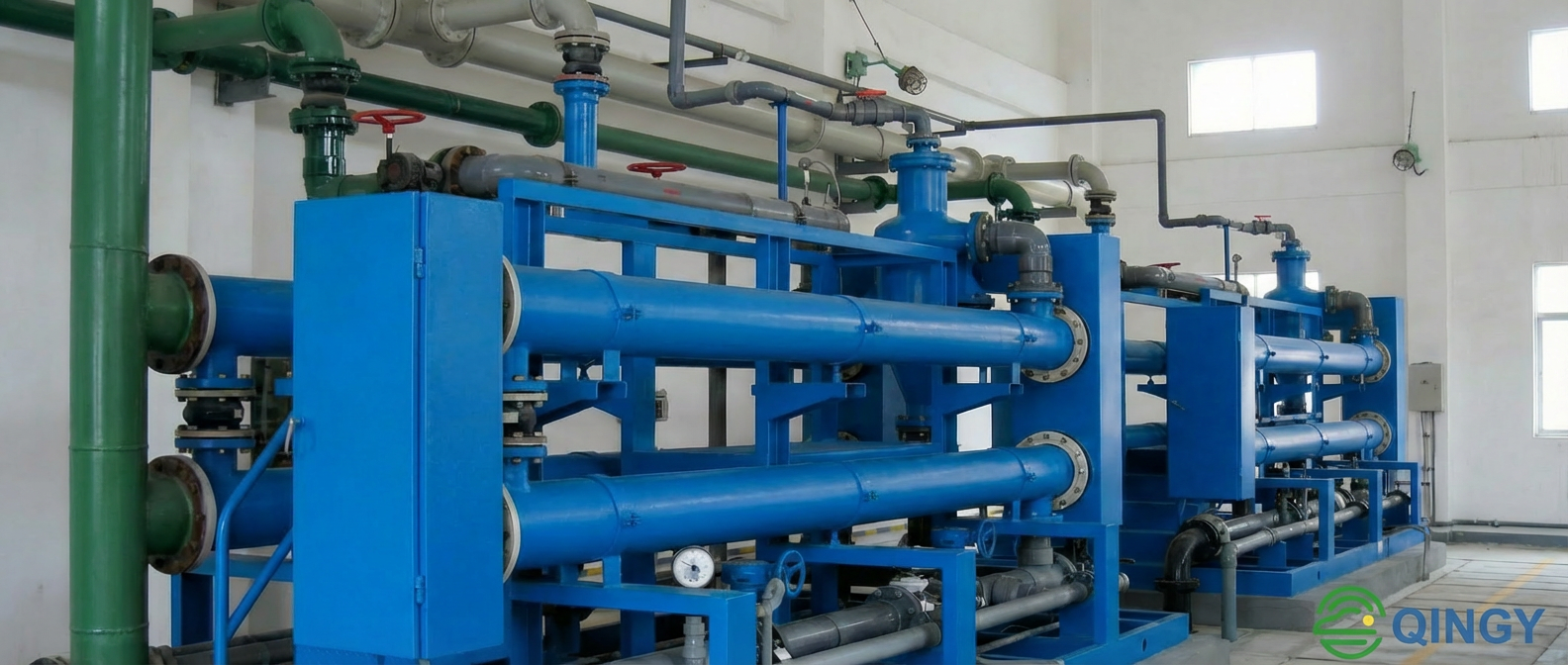
QINGY’s seawater electrolysis chlorine generation system is purpose-built for coastal facilities that have direct access to seawater. Instead of using salt brine, this system electrolyzes filtered seawater directly to produce sodium hypochlorite for biofouling control, cooling water disinfection, and process water treatment. Ideal for power plants, desalination facilities, offshore platforms, and coastal industrial installations.
How Seawater Electrolysis Differs from Brine Electrolysis
While both systems produce sodium hypochlorite, seawater electrolysis has unique characteristics:
- Feed water: Direct seawater intake (filtered to 100–500 μm) instead of prepared brine
- Salinity: Natural seawater salinity (~35 g/L NaCl) is lower than brine (~300 g/L), requiring optimized cell design
- Concentration: Produces 0.5–2% NaClO (lower than brine systems) but at much higher flow rates
- Pre-treatment: Seawater requires filtration and pH adjustment, but no softening
- Applications: Primarily continuous dosing for biofouling prevention rather than batch disinfection
Technical Specifications
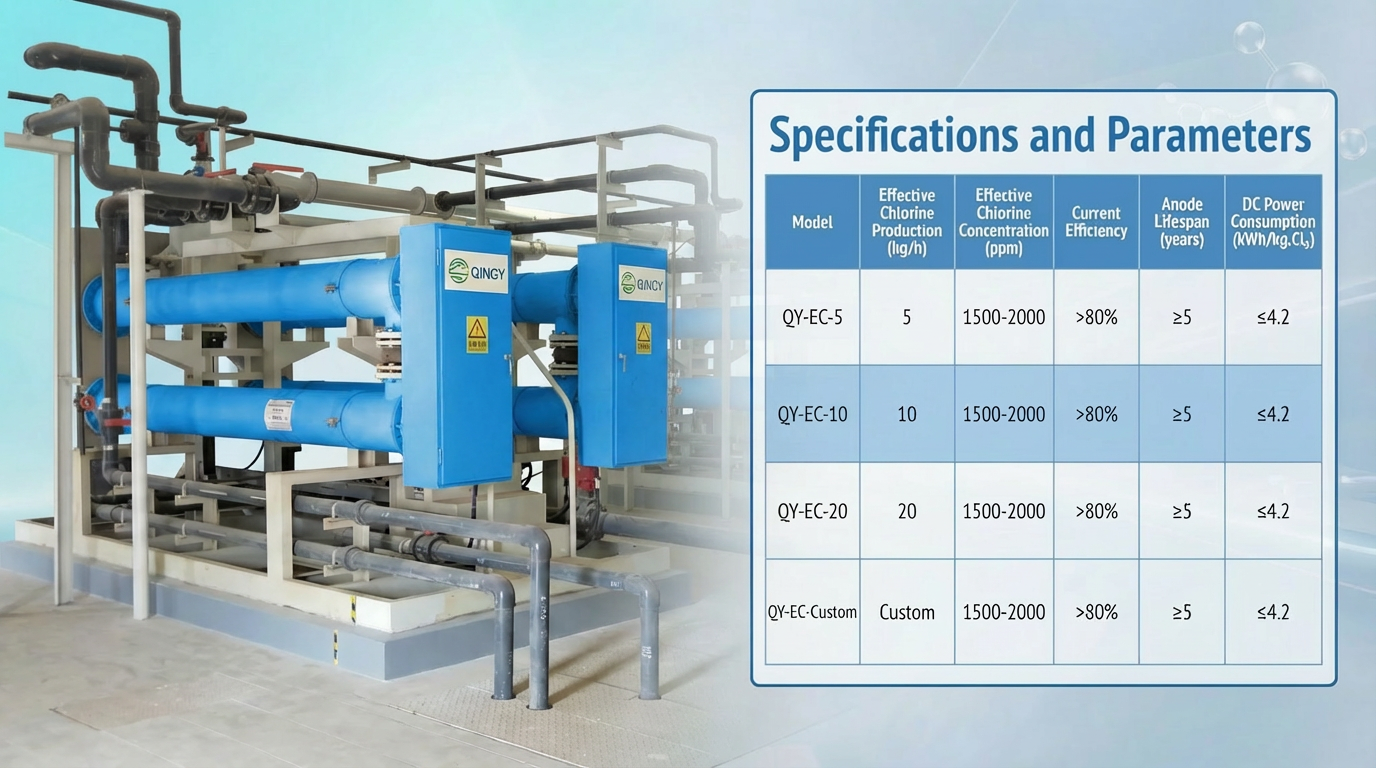
| Parameter | Value |
|---|---|
| Feed Water | Filtered seawater (TDS 30,000–35,000 mg/L) |
| Pre-treatment | Drum screen (100 μm) + cartridge filter (50 μm) |
| Output Concentration | 0.5–2.0% NaClO (5–20 g/L active Cl₂) |
| Electrolysis Cell | Specialized titanium electrode with Pt/Ir coating |
| Power Consumption | ≈8–12 kWh per kg Cl₂ (seawater-specific) |
| Electrode Anti-Fouling | Automatic reverse-polarity cleaning cycle |
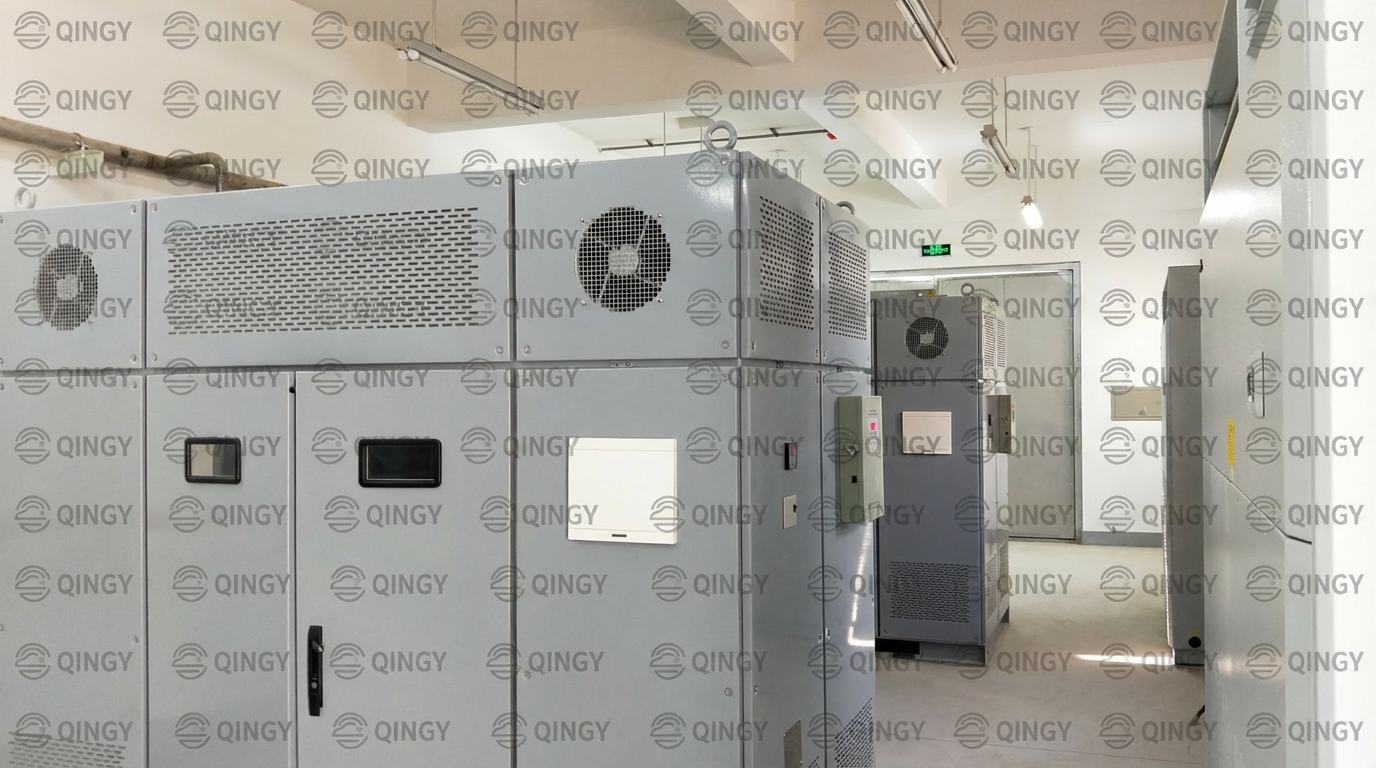
| Control System | PLC + HMI with seawater-specific algorithms |
| Material Construction | Duplex stainless steel (2205) / titanium / PVC-U |
| Design Life | 20+ years (marine-grade materials) |
| Certifications | CE, UL, IEC, DNV (optional for offshore), ATEX |
Key Design Features for Marine Environments
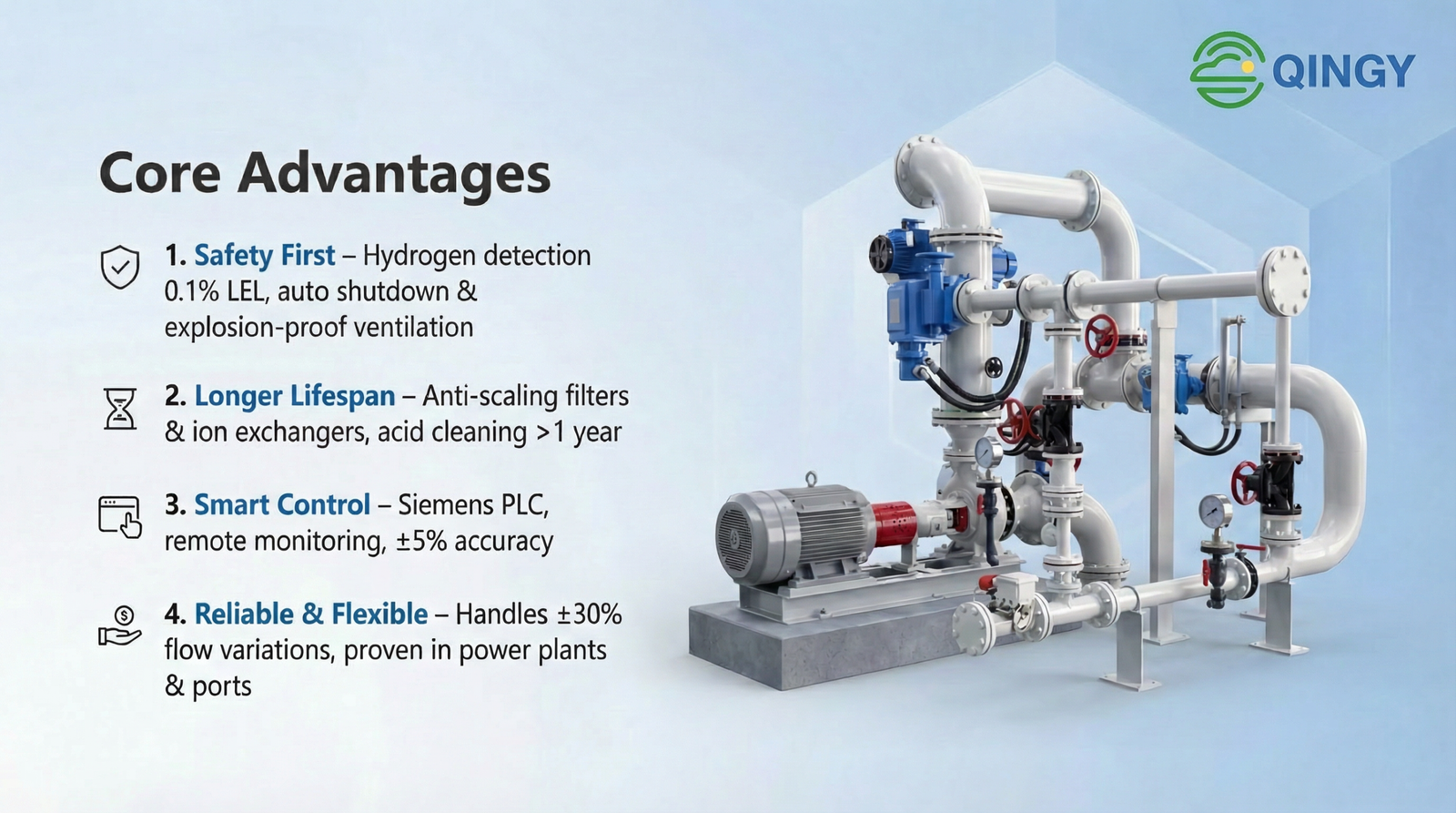
- Anti-fouling electrodes: Specialized Pt/Ir coating resists calcium carbonate and magnesium hydroxide scaling common in seawater electrolysis. Automatic reverse-polarity cleaning removes accumulated scale every 4–8 hours.
- Marine-grade materials: All wetted parts use duplex stainless steel (2205), titanium, or high-grade PVC to withstand corrosive seawater. No mild steel or aluminum components in the process stream.
- Tropical marine intake: Includes automated drum screen filtration, backwash system, and optional chlorination intake to prevent marine growth in pipes.
- Cyclone-resistant design: Enclosure rated for coastal wind loads and salt spray per IEC 61400 (wind turbine standard) or DNV-OS-C101 (offshore).
Typical Applications
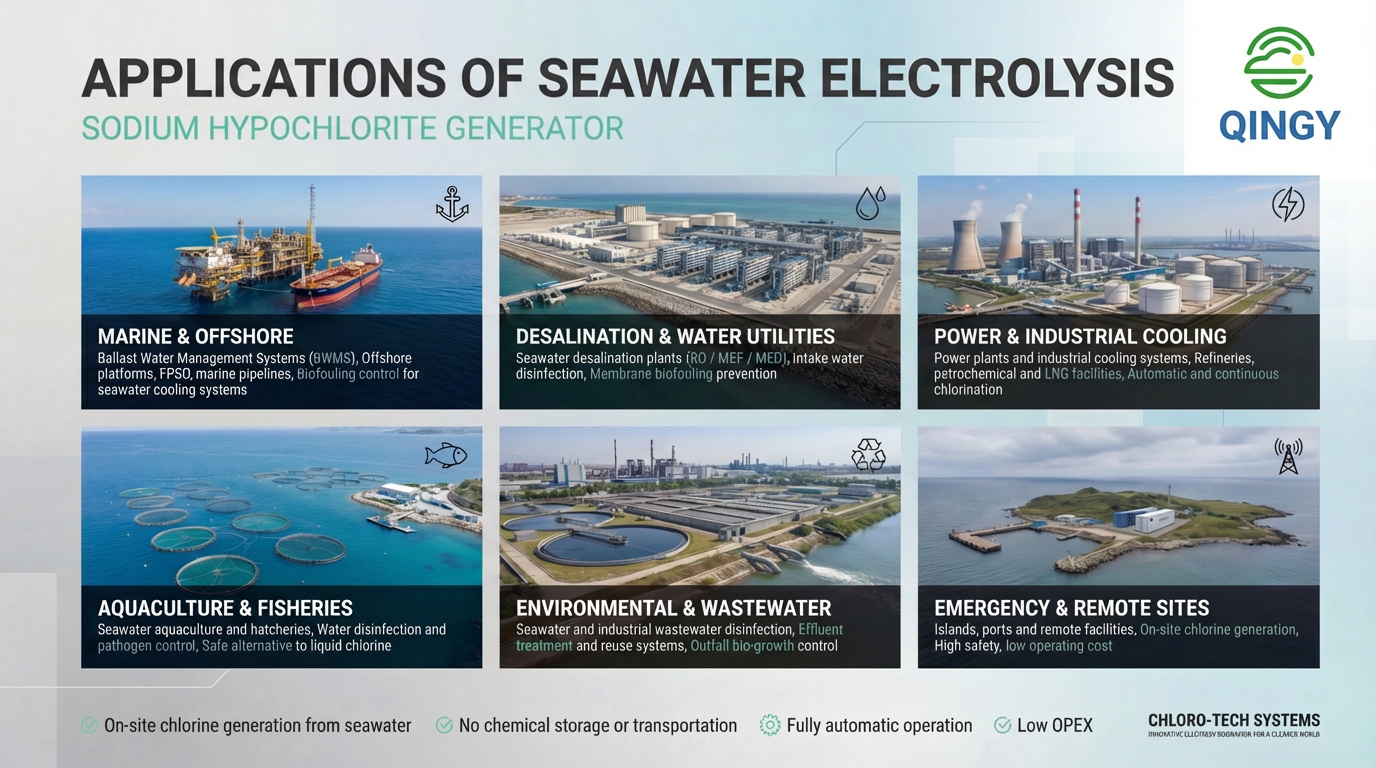
- Power plant cooling water: Continuous low-dose NaClO injection to prevent biofouling in condenser tubes and cooling water intake structures
- Desalination plant pretreatment: Chlorination of raw seawater before RO membranes to control biofouling, followed by dechlorination before membrane contact
- Offshore platforms: Ballast water treatment, process water disinfection, and deck wash-down systems
- Ports and harbors: Ballast water exchange treatment and hull biofouling prevention
- Coastal aquaculture: Water treatment and disease prevention in marine fish and shrimp farms
- LNG terminals: Cooling water intake biofouling control
Seawater vs. Brine System: Which Is Right for You?
| Factor | Seawater Electrolysis | Brine Electrolysis |
|---|---|---|
| Feed source | Seawater (free) | Salt + water |
| Output concentration | 0.5–2% | 10–15% |
| Best for | Continuous dosing, biofouling | Batch disinfection, storage |
| Salt logistics | None needed | Regular salt delivery |
| Location requirement | Coastal / seawater access | Any location |
| Maintenance frequency | Higher (scaling management) | Lower |
| Capital cost | Higher (marine materials) | Lower |
FAQ
Can I use brackish water instead of full seawater?
Yes. Brackish water (TDS 1,000–30,000 mg/L) works well with slight adjustments to the electrolysis parameters. Our systems are field-configurable for a range of salinities.
How do you handle electrode scaling in seawater?
Seawater electrolysis naturally forms calcium carbonate and magnesium hydroxide scales on electrodes. We use three countermeasures: (1) automatic reverse-polarity cleaning every 4–8 hours, (2) periodic acid wash (CIP system), and (3) specialized Pt/Ir electrode coating that resists scale adhesion.
What is the system design life?
With marine-grade duplex stainless steel and titanium construction, the system is designed for 20+ years of continuous operation in coastal environments. Electrode recoating is needed every 5–8 years due to the more aggressive seawater environment.